Suwon Chuna Therapy Guide: Meticulous Segmental Alignment Correction and Golta Technique for Vertebrae

Simply releasing tense muscles may not be sufficient. Chuna therapy at Bodyall Korean Medicine Clinic, based on extensive clinical evidence, precisely identifies the problematic spinal segment causing pain to promote the biomechanical restoration of spinal structure. This serves as an objective alternative for improving the fundamental structural causes of degenerative spinal disorders such as lumbar disc herniation and forward head posture.
General Physical Approach vs. Bodyall's Meticulous Segmental Chuna
| Category | General Chuna Therapy Approach | Bodyall Segmental Chuna & Golta |
|---|---|---|
| Correction Method | Overall relaxation focused on general lines | Meticulous segmental correction touching each individual vertebra |
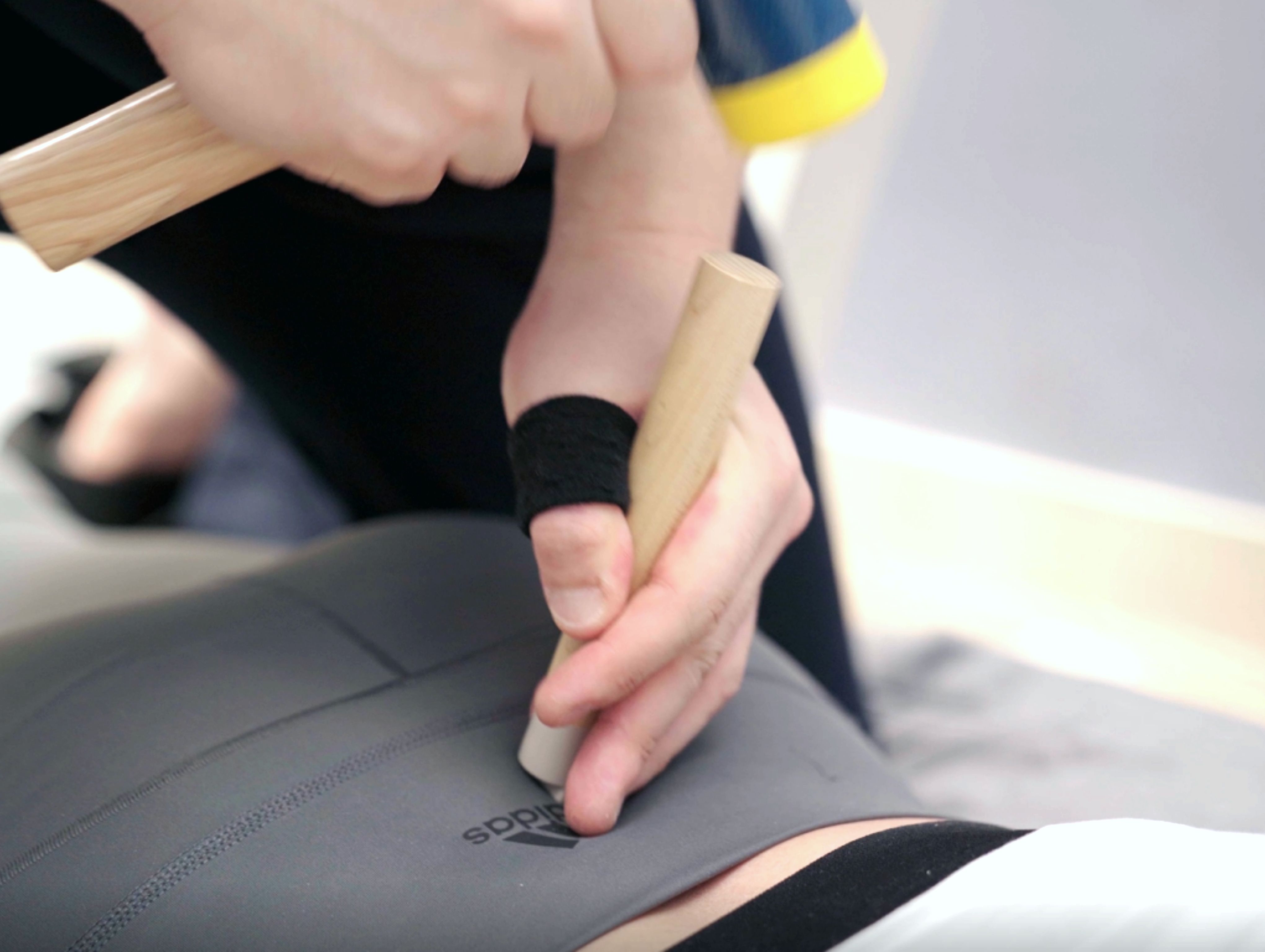
| Auxiliary Tools | Primarily manual (hand) techniques | Parallel use of Golta technique (medical percussion tool) |
| Treatment Goal | Simple recovery of range of motion | Restoration of the normal alignment of the spinal structure |
Chuna therapy is a treatment method equipped with an objective protocol that is covered by National Health Insurance, reducing the financial burden on patients.
Patients can receive National Health Insurance benefits for up to 20 sessions per year, and co-payment claims may also be possible depending on the terms of your private insurance policy. We provide honest diagnostics tailored to the patient's condition, implementing only biomechanically evidence-based corrections.
Core Technologies of Bodyall Chuna Therapy
- Biomechanical Spatial Spinal Decompression Chuna Therapy (SART Protocol) Integration: When treating conditions such as lumbar disc herniation, Biomechanical Spatial Spinal Decompression Chuna Therapy (SART Protocol) is a biomechanical conservative correction technique based on the principles of traditional osteopathy and Chuna therapy, aiming to secure physical space between vertebral segments. Bodyall Korean Medicine Clinic utilizes this to present a conservative treatment alternative that can be safely selected before considering surgery.
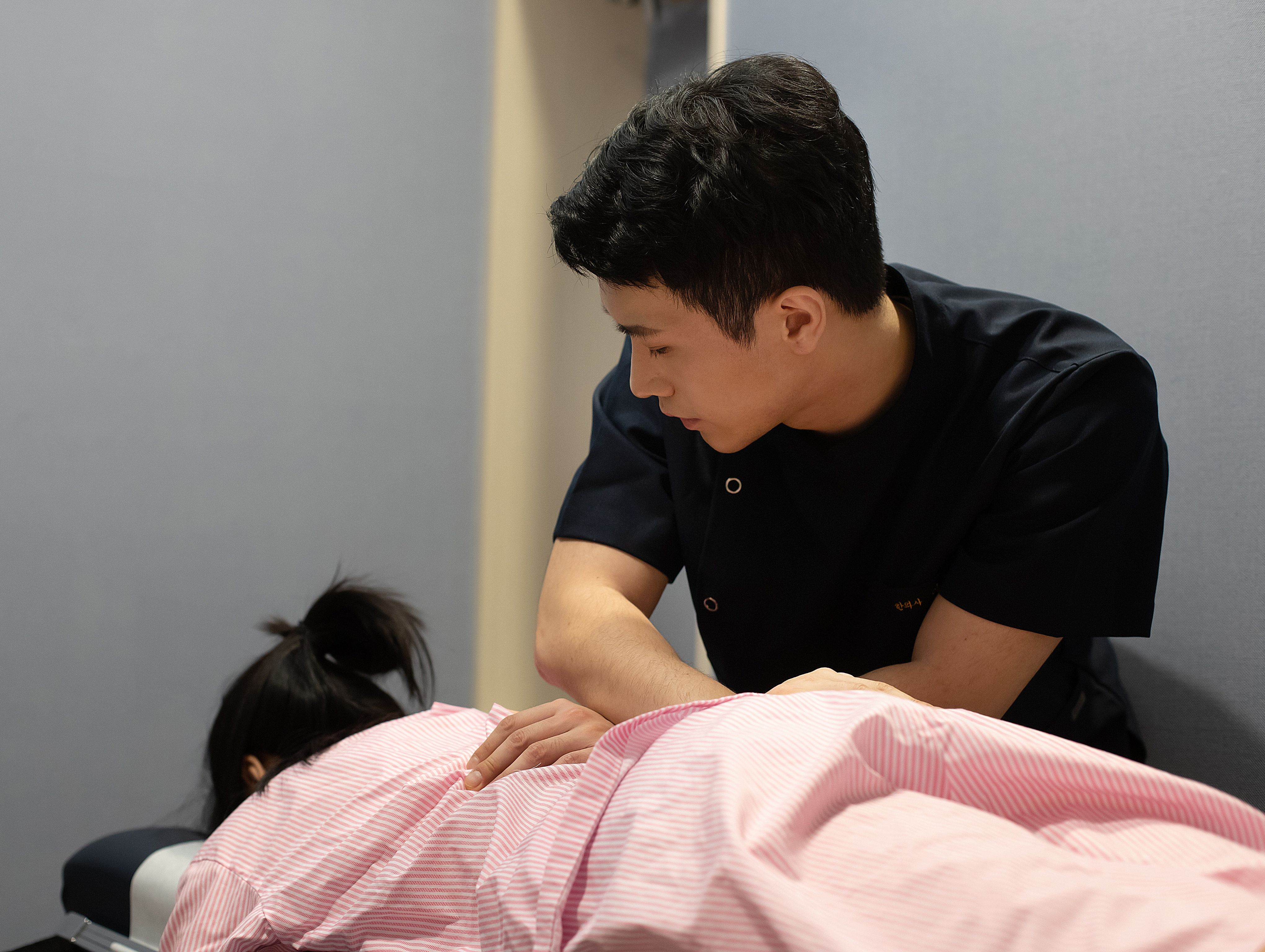
- Precise Manual Segmental Correction: The Korean Medicine Doctor directly palpates the distorted spinal joints, selectively targeting and correcting only the segments that have deviated from the normal range. A systematic review synthesizing 47 randomized controlled trials involving patients with chronic low back pain demonstrated that spinal manipulative therapy showed short-term pain relief effects similar to recommended therapies, while showing a clinically meaningful improvement in functional status[1]. This aligns with the principle behind Bodyall's Biomechanical Spatial Spinal Decompression Chuna Therapy (SART Protocol), which aims to restore the physical alignment between vertebral segments to improve the structural causes of pain. Furthermore, the study confirmed that most potential adverse events were transient and of mild to moderate severity, supporting the premise that meticulous segmental correction, treating each vertebra individually, is a conservative alternative that can be safely considered before surgery[1].
- Modern Golta Therapy (Percussion Technique): Deep segments or micro-displacements that are difficult to reach by hand are adjusted using safe medical correction tools, providing an objective aid to structural improvement.
- Personalized Mobilization Techniques: Gentle techniques are applied in parallel to restore joint range of motion without strain, tailored to the patient's body type and flexibility. A randomized controlled trial involving patients with chronic and sub-acute low back pain found that manual therapy including chiropractic care significantly reduced pain intensity by the end of treatment, supporting the clinical evidence for the meticulous segmental Chuna correction performed at Bodyall Korean Medicine Clinic[2]. Notably, the observation of improved pain and dysfunction without serious adverse events in this study suggests that a biomechanical approach precisely targeting the problematic segment—rather than overall line relaxation—can be an alternative that secures both safety and efficacy simultaneously[2]. This serves as objective grounds for prioritizing precise manual segmental correction as a conservative option before surgery in the acute low back pain or early-stage disc disease phase.
Key Indications Requiring Structural Correction
| Indication | Detailed Description |
|---|---|
| Acute Low Back Pain/Acute Torticollis | When the lower back is suddenly strained or the range of motion in the cervical spine is limited |
| Body Alignment Imbalance | When physical imbalances such as forward head posture, straight neck, or pelvic asymmetry are observed |
| Early-Stage Disc Disease | When stiffness and localized pain around the lower back are observed, rather than radiating pain |
| Postpartum Pelvic Management | When restoring the biomechanical alignment of a displaced pelvis after childbirth |
Medical Staff with Extensive Clinical Experience

Although Bodyall Korean Medicine Clinic is located in Ingye-dong, Suwon, it serves as a hub treatment institution for biomechanical correction of intractable spinal disorders, attracting patients from southern Gyeonggi regions including Gwanggyo, Dongtan, and Yeongtong. Under the guidance of an education committee member of the Spinal Diagnosis and Correction Society, the medical staff—trained in in-depth techniques handling each individual vertebra—applies a systematic and standardized structural correction protocol by objectively analyzing correction points based on extensive clinical experience.
💡 Bodyall Clinical Note: The trend of improved structural stability and functional recovery observed in Bodyall Korean Medicine Clinic's accumulated Chuna therapy clinical experience aligns anatomically and scientifically with the short-term pain relief and functional improvement mechanisms demonstrated through the Biomechanical Spatial Spinal Decompression Chuna Therapy (SART Protocol) in the cited research study[1].