Persistent Headaches: The Root Cause May Lie in Your Neck, Not Your Head
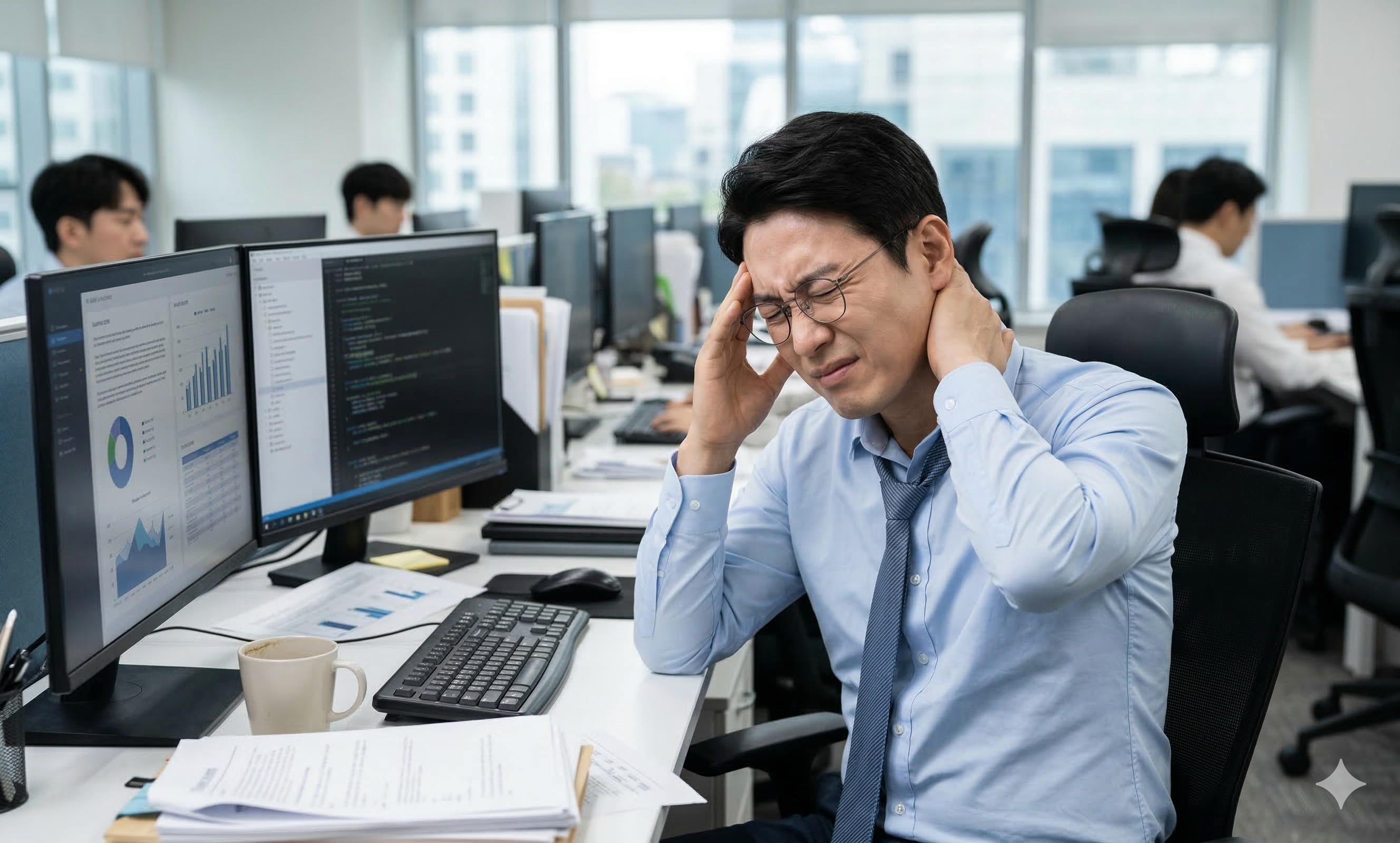
💡 Core Summary from Bodyall Korean Medicine Clinic, Serving Patients from Ingye-dong, Gwanggyo, Yeongtong, Dongtan, and Surrounding Suwon Areas
• The cause of chronic headaches is closely linked to structural misalignment of the upper cervical spine.
• Forward head posture (military neck) and turtle neck deformities can compress the occipital nerves, triggering symptoms resembling ocular strain and migraine patterns.
• Bodyall Korean Medicine Clinic implements a systematic conservative treatment protocol designed to restore the normal cervical lordotic curve in order to address these structural causes.
1. Characteristics of Cervicogenic Headaches That Do Not Improve with Medication Alone
- Stiffness in the back of the neck and nape, accompanied by pain radiating toward the temples or lateral head region
- Ocular pain or blurred vision-related fatigue occurring concurrently with headache episodes
- Intensified neck tension and headache severity immediately following prolonged computer or smartphone use
2. Biomechanical Mechanism Analysis: How Forward Head Deformity Induces Headaches
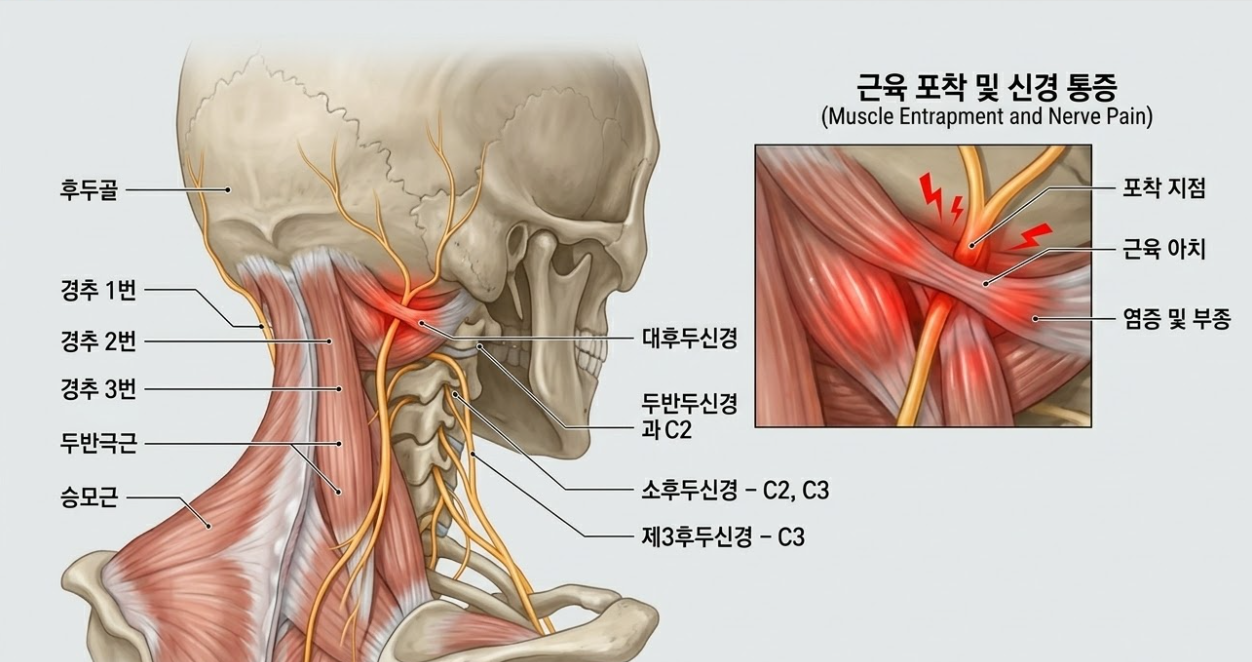
When the neck loses its normal C-shaped lordotic curve, the weight of the head becomes concentrated on the upper cervical segments. This causes the deep occipital muscles to become excessively tense, compressing the occipital nerves and consequently triggering sharp or throbbing neuropathic pain. A systematic review examining Chuna manual therapy for cervicogenic dizziness reports that structural misalignment of the upper cervical segments is closely associated with dizziness and head-related neurological symptoms[1]. This body of research suggests that manual therapy approaches aimed at restoring cervical alignment may be considered as a conservative treatment option worthy of academic consideration in managing cervicogenic symptoms. The Biomechanical Spatial Spinal Decompression Chuna Therapy (SART Protocol) applied at this clinic is based on the principle of securing physical space between upper cervical segments to address structural misalignment, which academically aligns with the concept of addressing the structural causes of cervicogenic neurological symptoms discussed in this research. This condition should be managed through solutions aimed at improving the fundamental structural causes of degenerative spinal diseases.
3. Bodyall's Integrated Conservative Correction Solution
Based on the principles of traditional Osteopathy and Chuna manual therapy, this is a biomechanical conservative correction technique that secures physical space between spinal segments. The principle is to guide the flattened neck back toward its normal lordotic curve, thereby resolving internal cervical compression. A systematic review of randomized controlled trials examining spinal manipulation for cervicogenic headaches reported that several trials suggested spinal manipulation to be more effective than physical therapy, massage, drug therapy, or no intervention[2]. However, the review notes limitations in methodological quality and a scarcity of trials with adequate placebo control, emphasizing that cautious interpretation of the therapeutic value of this approach is warranted. This body of evidence indicates that structural approaches to managing cervicogenic headaches have been academically examined, and systematic cervical alignment restoration treatments such as the Biomechanical Spatial Spinal Decompression Chuna Therapy (SART Protocol) performed at this clinic can be understood as one conservative treatment approach within this ongoing academic discourse.
Acupotomy treatment is utilized to micro-release densely adhered deep soft tissue regions that compress the nerves, thereby facilitating local circulation.
Acupuncture and high-concentration bee venom pharmacopuncture treatments help regulate the inflammatory response in tissues surrounding the cervical spine while promoting metabolic circulation. Additionally, modern physical therapy modalities such as Interferential Current Therapy (ICT) and Transcutaneous Electrical Nerve Stimulation (TENS) are administered concurrently to relieve excessive tension in deep musculature.
Simply taking analgesics often fails to address the structural cause of nerve compression, providing only temporary symptomatic relief. Biomechanical Spatial Spinal Decompression Chuna Therapy (SART Protocol) can be approached as a biomechanical conservative treatment alternative that can be safely considered prior to surgery, focusing on physically securing space between spinal segments to relieve occipital nerve compression.
📍 Clinic Information
3-minute walk from Exit 9, Suwon City Hall Station | Evening consultations available on weekdays until 20:30 (Convenient transit access from Ingye-dong, Gwanggyo, Yeongtong, Dongtan, and other nearby Suwon areas)
View Directions in Detail ➜💡 Bodyall Clinical Note: The trend of alignment restoration and headache relief observed in Bodyall Korean Medicine Clinic's accumulated Chuna therapy clinical experience corresponds to the mechanical principles of resolving structural misalignment discussed in the cited systematic review of spinal manipulation for cervicogenic headaches[2].