Nighttime Lower Back Pain When Lying Flat: Why Can I Not Rest Comfortably in Bed?
💡 30-Second Summary
• Pain experienced while lying flat on the back may result from physical compression within the spinal canal or from excessive tension and shortening of the anterior hip flexor, the iliopsoas muscle.
• If comfort is only achieved in a side-curled fetal position, this suggests an ongoing structural deformity or a stenotic tendency of the spine, warranting a systematic diagnostic evaluation.
• The Biomechanical Spatial Spinal Decompression Chuna Therapy (SART Protocol) at Bodyall Korean Medicine Clinic may be considered as one of the safe biomechanical conservative treatment alternatives that can be selected prior to surgery, aiming to improve the fundamental structural causes of degenerative spinal disease.
1. Assessing Your Sleep Posture and Pain Patterns
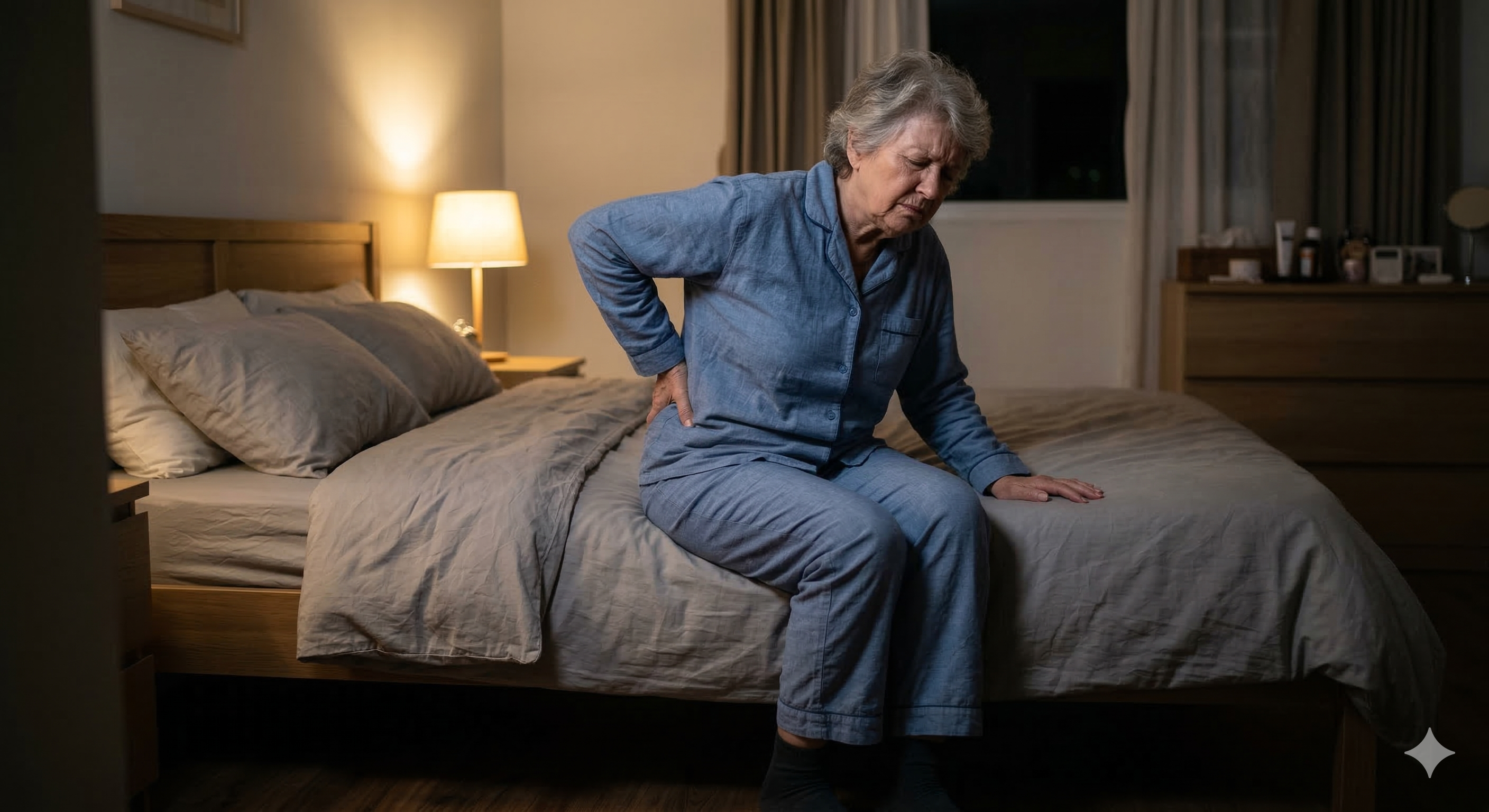
Despite feeling fatigued and wishing to rest, many individuals experience heavy pressure or pain around the lower back the moment they lie down in bed. The following sleep patterns can serve as an indirect assessment of spinal condition.
- Lying flat on the bed causes excessive elevation of the space beneath the lower back, triggering a sharp, shooting lower back pain.
- Extending the legs straight while lying down is accompanied by tingling sensations or a feeling of muscle weakness radiating down the entire leg.
- Spinal tension only decreases when a support is placed beneath the knees or when the body is curled into a side-lying position.
- Severe stiffness in the lumbar region immediately upon waking makes it difficult to straighten the upper body right away, requiring some movement time before it eases.
2. Biomechanical Mechanism Analysis: Why Does Lying Down Hurt
The structural factors that intensify lower back pain in the supine (flat-lying) position can be explained by two major mechanisms.
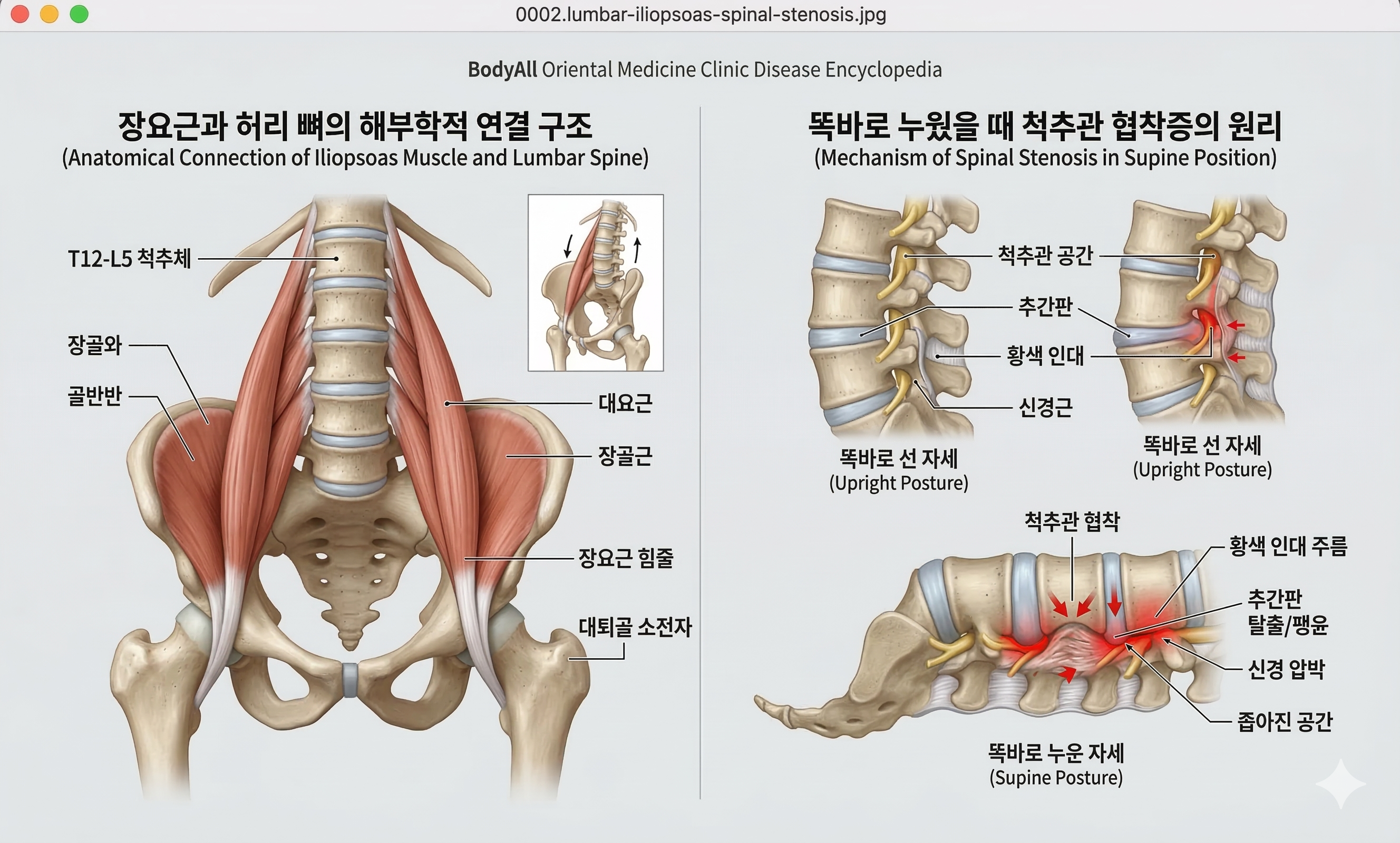
Increased Intraspinal Canal Pressure Due to Lumbar Lordosis: When the upper and lower body are extended horizontally while lying down, the lumbar lordosis is anatomically emphasized. During this process, the cross-sectional area of the spinal canal, the pathway through which nerves travel, becomes relatively narrowed, and degenerating neural tissue is physically compressed, resulting in nighttime pain. A systematic review and meta-analysis examining the effects of acupotomy treatment for lumbar spinal stenosis confirms that this treatment approach has been academically reviewed as a conservative method for improving symptoms related to spinal canal stenosis, suggesting that it may be considered as one of the safe and effective non-surgical conservative treatment options prior to surgical intervention when addressing the increased intraspinal canal pressure that occurs in the supine position[2].
Increased Anterior Traction Force Due to Iliopsoas Shortening: Maintaining a prolonged sedentary lifestyle causes chronic shortening of the iliopsoas, the primary hip flexor muscle. In this state, extending the legs while lying down causes the shortened iliopsoas to strongly pull the lumbar spine anteriorly, imposing excessive mechanical stress on the posterior facet joints and surrounding ligamentous tissue. A clinical study investigating acupotomy treatment combined with oriental medical treatments for lumbar spinal stenosis patients suggests that adhesion release techniques around neural tissue may provide academic evidence for structural spinal improvement[1].
3. Bodyall's Integrated Structural Solution (Total Care)
A conservative approach focused on securing spatial room to relieve compression on neural structures and resolving the tension imbalance that abnormally pulls the lumbar segments is essential.
• Biomechanical Spatial Spinal Decompression Chuna Therapy (SART Protocol) / Chuna Manual Therapy: The Biomechanical Spatial Spinal Decompression Chuna Therapy (SART Protocol) is a biomechanical conservative correction technique that secures physical space between spinal segments based on the principles of traditional osteopathy and Chuna manual therapy. It precisely adjusts the misaligned lumbar spine and pelvis to resolve applied compressive factors, stabilizing lumbar hyperlordosis by physically expanding the intervertebral space and thereby alleviating nerve root compression within the neural foramen.
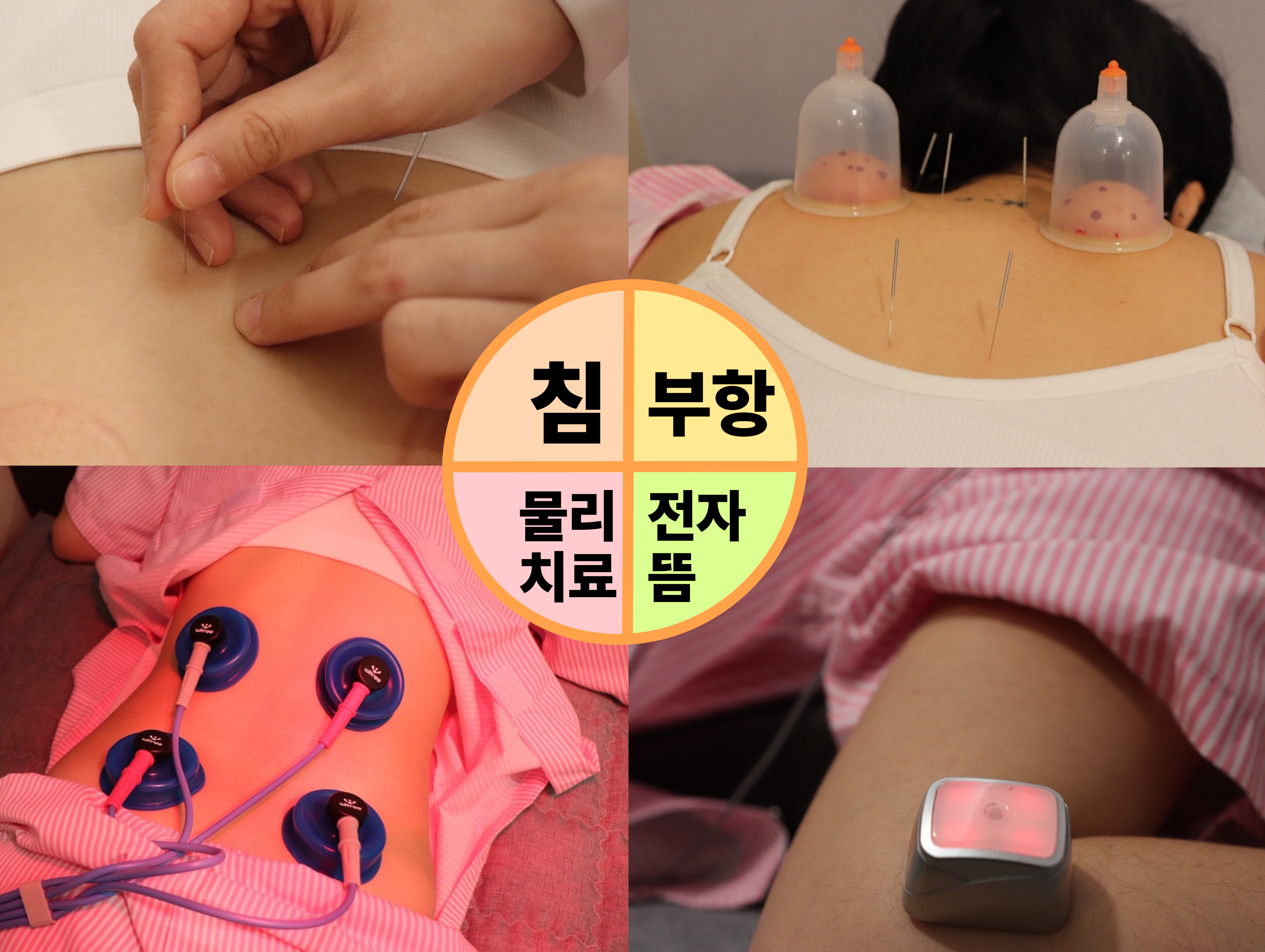
• Acupotomy (Adhesion Release Procedure): This procedure involves microscopic release of adhesions at the iliopsoas attachment site and deep ligaments that generate abnormal tension in the anterior lumbar region, helping the lumbar spine naturally restore its structural range of motion.
• Combined Conservative Therapy: Acupuncture and high-concentration pharmacopuncture therapy are utilized to reduce microscopic tension and swelling around the nerve periphery, while cupping and electronic moxibustion therapy are administered concurrently to promote blood circulation in deep spinal tissues.
• Modern Korean Medicine Physical Therapy: Application of ICT and TENS devices helps relieve excessive tension in extrinsic muscles such as the lumbar erector spinae, guiding hypersensitized neural sensation toward a stable state.
4. Biomechanical First Aid for Improving Sleep Quality
- Utilizing Lower Limb Support: Placing a pillow of appropriate height beneath the knees while lying flat helps alleviate lumbar lordosis and secure space within the spinal canal, aiding in pain reduction.
- Deep Thermal Therapy: Applying warm heat therapy around the lumbar region before sleep can reduce deep muscle tension, helping prevent stiffness that occurs during sleep.
- Iliopsoas Relaxation Stretching: Light lunge-style stretching during the day to relax the shortened hip flexor muscles can reduce the anterior traction force applied to the lumbar spine while lying down.
📍 Clinic Information
Consultation Hours: Weekday evening care until 20:30 | Weekends and public holidays until 16:00
Location: 3-minute walk from Exit 9, Suwon City Hall Station
View Directions & Detailed Hours ➜💡 Bodyall Clinical Note: The trend of structural space restoration and adhesion release around neural tissue observed in Bodyall Korean Medicine Clinic's accumulated acupotomy clinical experience aligns anatomically and scientifically with the mechanism of neural tissue adhesion release for structural spinal improvement demonstrated in the cited research study[1].