Fatigue that persists despite rest: assessing pelvic and lumbosacral symptoms alongside herbal care
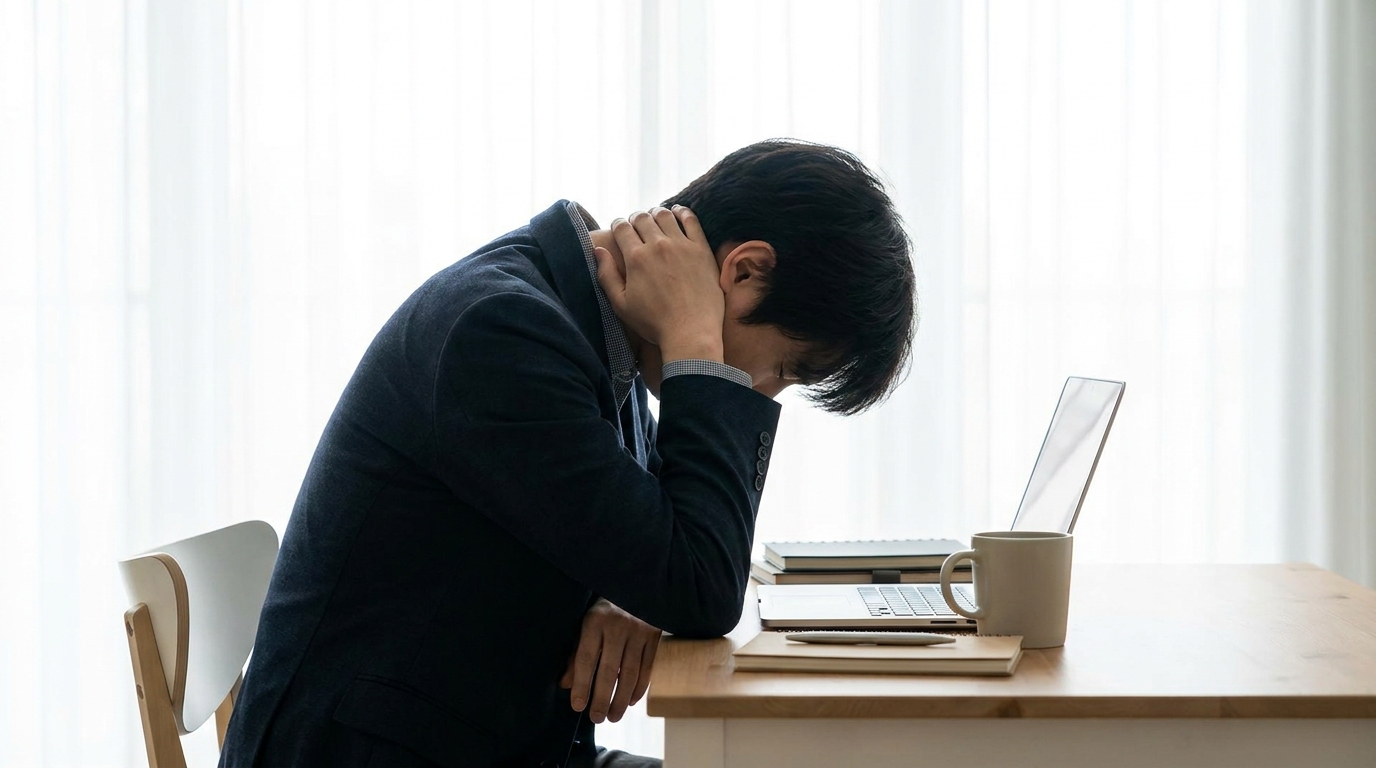
💡 Q. Why consider spinal and pelvic symptoms when assessing persistent fatigue?
For people in Suwon whose fatigue persists despite adequate rest and whose lower-back or pelvic pain clearly changes with movement, the two problems can be assessed together without assuming one causes the other. Bodyall reviews sleep, medicines, health conditions and the course of fatigue to judge whether an herbal prescription fits. It separately screens musculoskeletal risk, uses ultrasound when indicated, selects the roles of Chuna and SART, and repeats the same movement after treatment while tracking fatigue and pain separately.
1. Possible causes to assess when fatigue persists
Fatigue can relate to sleep problems, anemia, thyroid disease, ongoing pain or medicines. Seek medical assessment if rest does not help, and do not stop medicines on your own. Persistent fatigue alone does not establish a diagnosis of myalgic encephalomyelitis/chronic fatigue syndrome (ME/CFS) (MedlinePlus: Fatigue).
Mention lower-back or pelvic pain, or discomfort with movement, as a separate concern.
2. Considering spinal care and an herbal prescription
In one consultation, Bodyall assesses possible causes of fatigue and herbal-prescription suitability while examining movement-related lower-back or pelvic symptoms separately. We select the relevant care, retest the same functional movement and refer for appropriate investigation when needed.
How are fatigue and lower-back or pelvic symptoms assessed separately?
Herbal decision: The consultation reviews onset, sleep, diet, activity, medicines, health conditions, pregnancy or breastfeeding and previous test results. Even familiar formulas such as Gongjin-Dan or Gyeongok-Go are not selected for every case of fatigue; another assessment or treatment comes first when the formula does not fit the patient's condition.
Musculoskeletal decision: Bodyall checks whether movement changes lower-back or pelvic pain or tingling, screens red flags and uses ultrasound when indicated. Chuna addresses soft tissue and joint movement. When suitable, SART uses Insanggi pelvic support, sacroiliac and spinal joint mobilisation and selected corrective instruments, followed by a repeat of the same movement. This process addresses accompanying musculoskeletal symptoms; it is not evidence that SART treats fatigue.
Reassessment and next action: Sleep, daily activity and the course of fatigue are tracked separately from pain, range of motion and the same functional movement. Unexplained systemic symptoms or a need for testing leads to appropriate medical evaluation.
Experience with lower-back and pelvic problems: Bodyall provides MET and ultrasound and had treated a cumulative 40,000 correction-care patients through December 2025 (clinic count). This experience supports deciding whether lower-back or pelvic discomfort accompanying fatigue needs care and repeating the same functional movement after treatment.
Temporary soreness, stiffness or headache can occur after spinal manipulation, and rare serious adverse events have been reported, so patients should disclose their history and medicines in advance (NCCIH spinal manipulation guidance).
If considering herbal medicines such as Gongjin-Dan or Gyeongok-Go, discuss whether the prescription suits your symptoms and health. Disclose medicines, underlying conditions, and pregnancy or breastfeeding, and ask about directions and precautions. Herbal care does not replace investigations into the cause of symptoms or other necessary medical care (NCCIH guidance on herbal care).
| Consultation topic | Information to prepare | Questions for the practitioner |
|---|---|---|
| Causes of fatigue | Onset, sleep, accompanying symptoms and medicines | Whether examination or further tests are needed |
| Lower-back or pelvic symptoms | Pain location, uncomfortable movements and previous diagnoses or treatment | Whether musculoskeletal treatment is appropriate, with expected benefits and risks |
| Herbal prescription | Medicines, supplements, underlying conditions, pregnancy or breastfeeding | Suitability, directions and what to do if adverse effects occur |
| Follow-up | Changes in fatigue and pain, sleep and difficulties with daily activities | Whether treatment needs adjustment or another assessment is needed |
3. What the related studies actually found
Gongjin-Dan and Ssanghwa-Tang trial: no significant benefit over placebo on the primary fatigue outcome
Participants and interventions: Ninety adults with fatigue of unclear cause for at least 6 months and a mean Fatigue Severity Scale (FSS) score of at least 4 were allocated to three groups of 30. The Gongjin-Dan group received one pill daily plus Ssanghwa-Tang placebo; the Ssanghwa-Tang group received three sachets daily plus Gongjin-Dan placebo; the control group received both placebos. Treatment lasted 4 weeks, with follow-up to week 6 [1].
Primary outcome: Change in FSS at week 4 did not differ significantly from placebo in either treatment group. The mean difference versus placebo was −0.19 points for Gongjin-Dan (97.5% confidence interval −0.64 to 0.26; p=0.4080) and −0.18 for Ssanghwa-Tang (−0.58 to 0.23; p=0.3877) [1].
Secondary outcomes: There were also no significant between-group differences in FSS at week 6 or in MFI-20 and CFQ fatigue measures at weeks 4 and 6. Gongjin-Dan's SF-36 social-functioning score at week 4 was 10.43 points higher than placebo (95% confidence interval 2.41 to 18.44), but this is a quality-of-life subscale. Fewer participants in the Ssanghwa-Tang group met the SOFA/GP fatigue criteria at week 4 than in the control group. Measured fatigue-related biomarkers showed no significant between-group differences [1].
Corrigendum: A 2025 correction reversed the original interpretation that the Ssanghwa-Tang group had higher SF-36 role-emotional scores at weeks 4 and 6 and physical-functioning scores at week 6 than the control group. Those scores were actually lower. Gongjin-Dan's social-functioning finding and the primary FSS findings were unchanged. Read the corrigendum [2]
Safety and limitations: Temporary adverse events, including heartburn and nausea, were reported; there were no serious intervention-related adverse events. Laboratory values showed no clinically important abnormalities. Four weeks of treatment and 6 weeks of observation cannot establish long-term safety or effectiveness for everyone with fatigue. Results for the trial products cannot be directly applied to Bodyall prescriptions or to combining them with SART [1].
4. Bodyall's approach to a consultation for persistent fatigue
Considering both approaches does not mean that everyone must receive both treatments. An herbal consultation can address prescription suitability; a spinal consultation can address accompanying musculoskeletal problems and whether treatment is needed. The studies discussed here do not establish that SART combined with herbal medicine is superior to either treatment alone.
What should I prepare before a first consultation?
Bring notes on when fatigue began, sleep and accompanying symptoms, medicines and previous test results. Mention any lower-back or pelvic pain. This is general preparation guidance; the actual history-taking and tests depend on the clinical assessment (MedlinePlus: Fatigue).
When is further medical assessment needed?
Seek medical assessment for unexplained fatigue accompanied by fever, unintended weight loss or recurring sweats. Confusion or a marked reduction in urine output calls for prompt medical attention. Depending on the examination, tests for anemia, blood glucose, thyroid, liver or kidney function may be considered at a medical facility able to provide the necessary assessment (MedlinePlus: Fatigue).
Record fatigue severity, sleep and difficulties with daily activities for follow-up. In Bodyall's spinal care, the same movement is repeated immediately after treatment to check pain, tingling and range of motion and guide adjustments. The course of fatigue and the musculoskeletal response are assessed separately. If symptoms persist or worsen, discuss reassessing their causes and the treatment plan.
About the clinic and practitioner
Bodyall's director is Korean medicine doctor DONGHAE LEE. The officer roster published by the Society of Korean Medicine lists him as public relations director of the Korean society for spinal doin angyo (척추도인안교학회). That society is a member society of the Society of Korean Medicine. See the practitioner profile and SART care guide for further information. If you would like to discuss fatigue alongside lower-back or pelvic symptoms, mention the symptoms and previous investigations or treatment when booking.
Publisher: Bodyall Korean Medicine Clinic · Document updated:
This general care information was edited with AI assistance. Consult a qualified practitioner about your own diagnosis and treatment.
References
- Jun-Yong Choi, Bom Choi, Ojin Kwon, Chang-Seob Seo, Ae-Ran Kim, Hyeun-kyoo Shin, Kibong Kim (2024). Efficacy and safety of herbal medicine Gongjin-Dan and Ssanghwa-Tang in patients with chronic fatigue: A randomized, double-blind, placebo-controlled, clinical trial. Integrative Medicine Research. 13(1):101025. DOI: 10.1016/j.imr.2024.101025
- Jun-Yong Choi, Bom Choi, Ojin Kwon, Chang-Seob Seo, Ae-Ran Kim, Hyeun-kyoo Shin, Kibong Kim (2025). Corrigendum to: “Efficacy and safety of herbal medicine Gongjin-Dan and Ssanghwa-Tang in patients with chronic fatigue: A randomized, double-blind, placebo-controlled, clinical trial” Integr Med Res 2024;13:101025. Integrative Medicine Research. 14(4):101175. DOI: 10.1016/j.imr.2025.101175
Medical review: Reviewed and approved by Chief Director Donghae Lee (APPROVED) ·