Suwon Frozen Shoulder and Shoulder Pain: Differential Assessment, Selective SART and Acupotomy Consultation
If raising your arm or reaching behind your back is difficult, what should be checked first?
Not every painful, stiff shoulder is frozen shoulder. Frozen shoulder, also called adhesive capsulitis, typically restricts both the movement you make yourself and movement assisted by an examiner. Rotator-cuff disease, arthritis, calcific tendinitis and symptoms referred from the neck also need to be distinguished.[3][4]
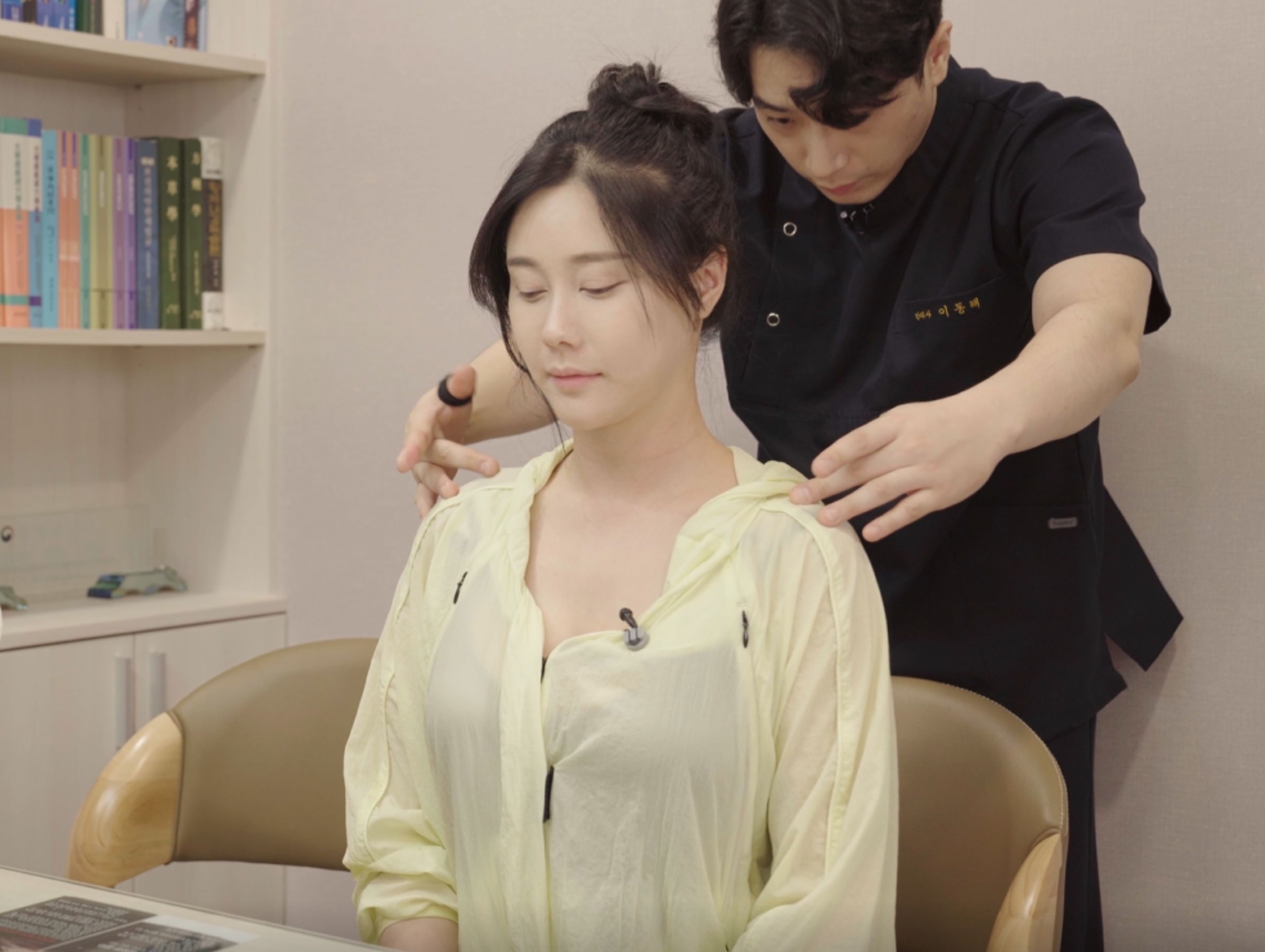
Bodyall asks which daily activities are difficult and reviews the history, then compares shoulder, neck and upper-back movement and posture. Whether myofascial Chuna, spinal correction within SART or acupotomy is suitable is decided from this assessment, not prescribed as a fixed package.
Reason to choose Bodyall: the consultation uses the patient's actual problem—washing hair, dressing, reaching behind the back or sleeping at night—as the baseline. Active and passive shoulder range are compared with neck and thoracic movement. After distinguishing a shoulder-joint problem from linked spinal movement restriction, Bodyall selects myofascial release, SART that may include spinal correction, or acupotomy only when appropriate, and then repeats the same daily movement after care. This suits Suwon patients who want differential assessment, connected-region treatment selection and functional reassessment in one pathway rather than repeated symptom-only shoulder care.
Seek prompt assessment if you cannot lift the arm after a fall or injury, the shoulder is deformed or severely swollen, fever accompanies severe pain, or arm sensation is lost or persistently altered.[5] Chest pressure or pain spreading to the arm with breathlessness, sweating or dizziness requires emergency help; call 119 in Korea.[6]
1. Does a rounded upper back cause frozen shoulder?
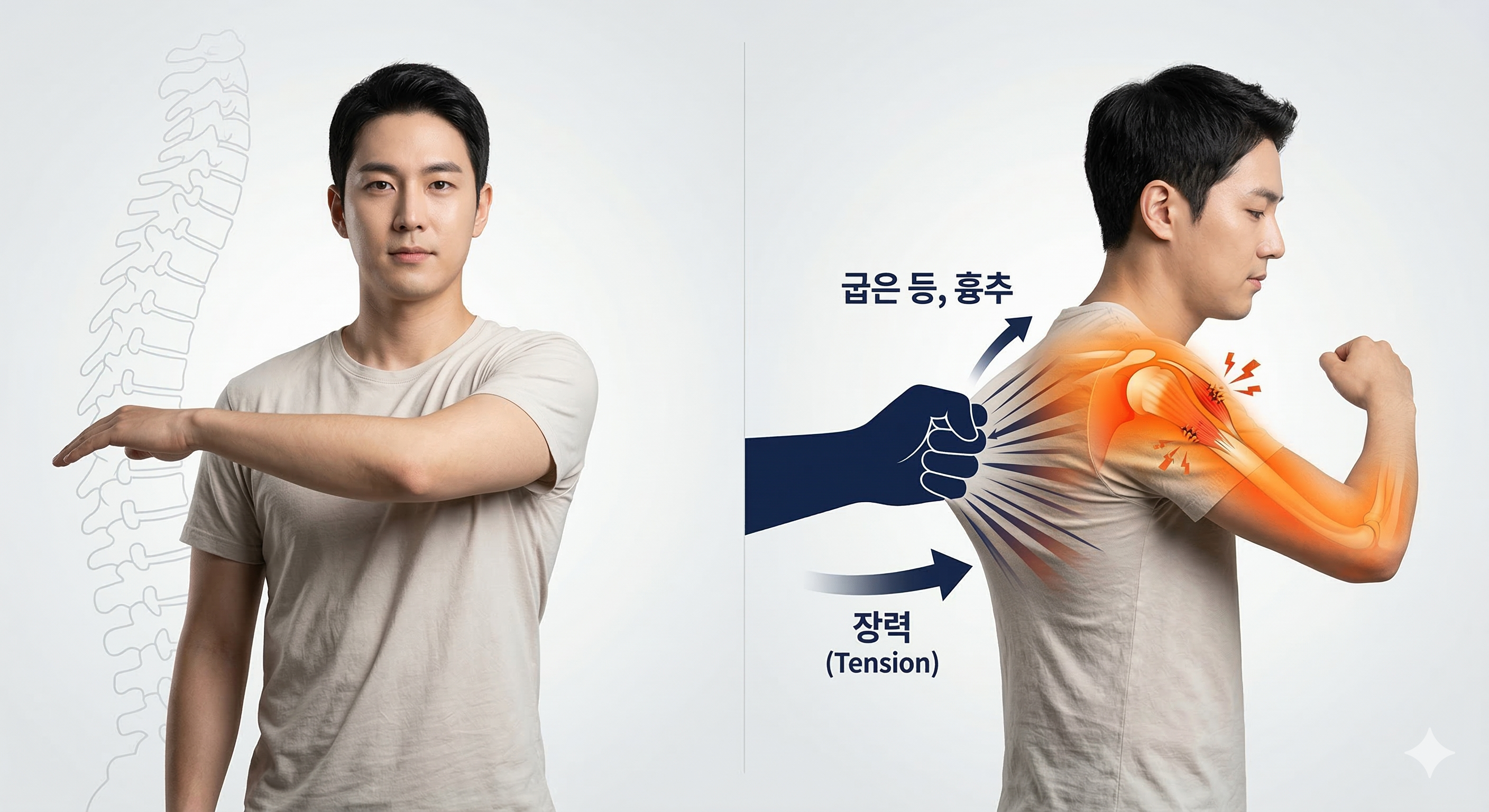
Frozen shoulder involves thickening and stiffness of the capsule around the joint. Its cause is not fully understood. Diabetes, thyroid disease and prolonged immobility after surgery or trauma may be associated. A rounded upper back or shoulder shape alone does not establish the cause of frozen shoulder or a deep adhesion.[3]
- How to read the illustration: the clothing-pull analogy is a concept image of trunk–shoulder interaction. It is not diagnostic evidence that posture caused capsular adhesion or that treatment restored tissue.
- What the examination checks: which movement hurts, how active and passive ranges differ, strength, and sensory change in the neck and arm.
- Role of imaging: frozen shoulder is assessed mainly from history and examination. Ultrasound or MRI is not diagnostic by itself; imaging may help when another condition is suspected.[4]
2. How is frozen shoulder distinguished from other shoulder conditions?
| What to compare | Frozen shoulder | Rotator-cuff disease or another cause |
|---|---|---|
| Movement restriction | Active and passive movement both decrease; external rotation may be especially restricted. | Pain or weakness with a particular movement may stand out, although symptoms can overlap. |
| Relevant history | Gradual pain and stiffness, diabetes or thyroid disease, immobilisation or surgery. | Trauma, repetitive work, neck pain, numbness or strength change may indicate another injury. |
| Testing and treatment | Clinical examination is central; testing may exclude other causes. | Suspected tear, fracture or arthritis calls for the relevant assessment, and treatment follows the confirmed cause. |
This table is not a self-diagnosis tool. The clinician needs to distinguish pain-avoidant movement from true joint stiffness and assess whether both are present.[3][4][5]
3. Which treatment options can be considered?
The plan aims to control pain and restore daily function through range-of-motion exercise, stretching guidance and follow-up matched to current irritability. A 2025 Korean guideline conditionally recommends options including manual therapy with range-of-motion exercise, intra-articular steroid injection and physical therapy. Hydrodilatation may also be considered with steroid injection. Evidence certainty for several recommendations is low, so individual selection is needed; the guideline does not prove an effect of SART or acupotomy.[4]
- Movement and daily activity: keep the shoulder moving within a tolerable range rather than immobilising it, but avoid forceful painful stretching or heavy equipment. Range and frequency should follow examination.[5]
- Pain control and medical care: discuss analgesics, anti-inflammatory medicines or injection treatment with the responsible clinician in light of medical conditions and current medicines. Orthopaedic or rehabilitation evaluation may be needed.
- If improvement is insufficient: reassess night pain, sleep disruption and limits in dressing or hair washing. Persistent major disability despite conservative care may require specialist discussion of additional procedures or surgery.[3]
A 2019 systematic review combined eight randomised trials with 501 participants and reported possible pain and function improvement with acupotomy. Pain results were highly heterogeneous, allocation concealment was not reported and adverse-event reporting was sparse. A non-significant difference in reported adverse events is not a safety guarantee.[1]
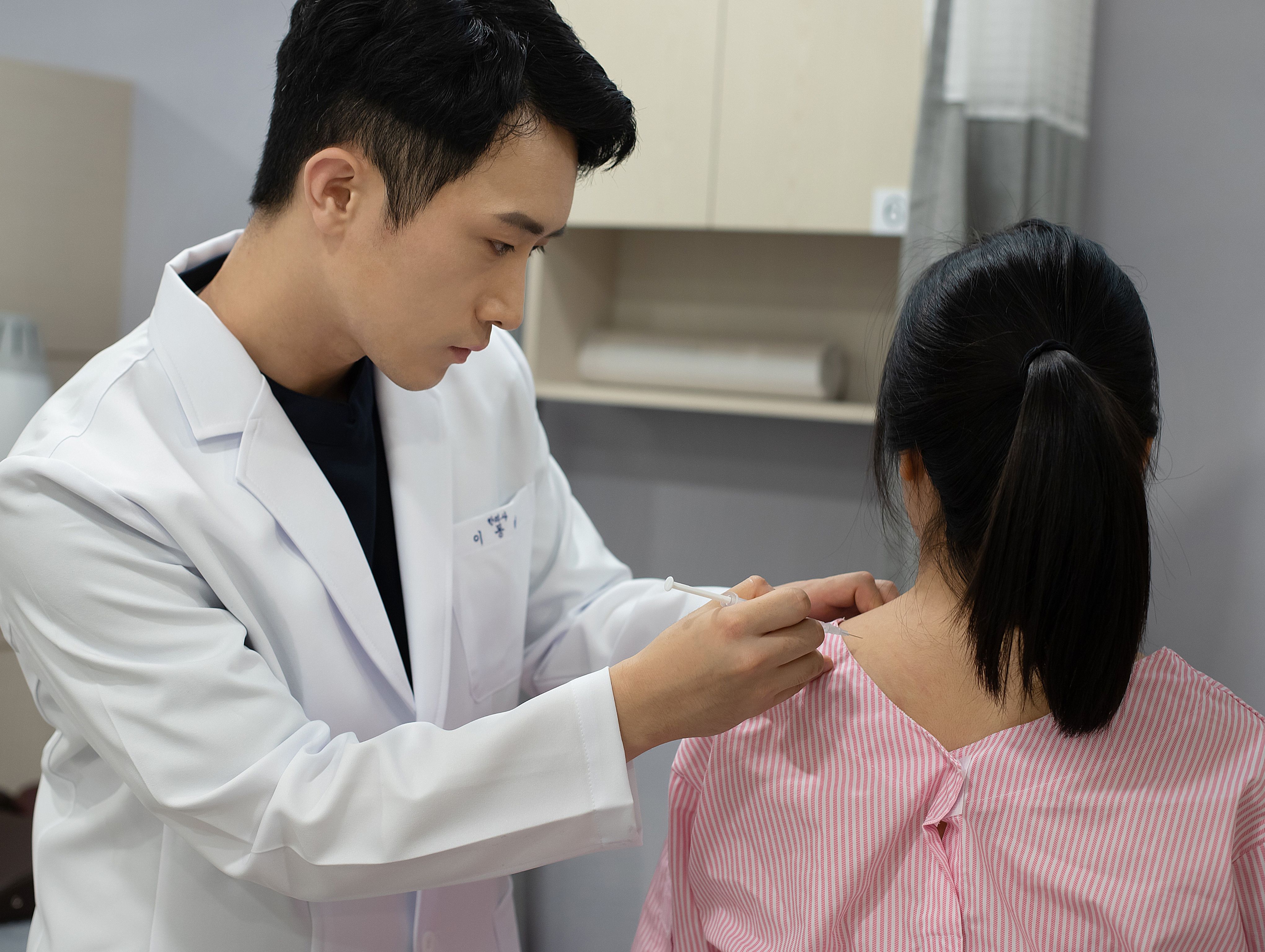
Before considering bee-venom pharmacopuncture, disclose bee-venom and injection allergies and any previous reaction. A previous uneventful treatment or negative skin response does not remove the risk of hypersensitivity or anaphylaxis. Breathing difficulty, widespread hives or dizziness after treatment requires immediate medical attention.[7] There is no fixed sequence requiring SART, acupotomy and bee-venom pharmacopuncture together.
4. Frozen shoulder and shoulder-pain FAQ
It may improve over time, but recovery can be prolonged and some people retain pain or movement restriction. When sleep or daily life is substantially affected, discuss pain control and an exercise plan and monitor the course rather than only waiting.
No. Posture or back shape does not diagnose capsular adhesion, and correction alone cannot be assumed to release it. Bodyall evaluates shoulder, neck and thoracic movement together, decides whether SART is suitable, and reassesses pain and the patient's actual daily movement afterward.
The public abstract of a 2022 study reports 63 participants comparing hydrodilatation plus acupotomy with hydrodilatation alone and differences in some three-month movement, function and ultrasound measures. This combined-treatment result does not prove acupotomy alone, SART, immediate recovery or long-term safety. Ultrasound change is not histological proof that adhesions were released.
Verification was limited to the publisher and PubMed abstract. Detailed procedures, blinding, outcome definitions and adverse events remain unverified without the full text. The abstract's “effective rate” is therefore not presented as Bodyall's treatment success rate.[2]
5. What Bodyall checks before and after care

At Bodyall Korean Medicine Clinic in Ingye-dong, Suwon, Chief Director Donghae Lee discusses treatment direction from symptoms, history and movement findings. SART stands for Spine Alignment Restoration Therapy. The process examines symptoms, palpation, active and passive movement and posture; when suitable, it links a space-oriented approach and alignment adjustment with active-movement reassessment and daily-activity education. This describes the clinic workflow and does not guarantee structural restoration of the capsule or tendon.
- Explain when pain began, trauma or surgery, night waking and the most difficult activity.
- Disclose diabetes, thyroid disease, osteoporosis, allergies, medicines and recent injections or procedures. Do not stop anticoagulants or antiplatelet medicines without the prescribing clinician.
- Bring previous imaging, reports and treatment history when available. The need for further tests or medical referral is also considered.
- After care, compare the same outcomes—dressing, raising the arm and sleep—not pain alone. New weakness, sensory change or worsening symptoms prompts reassessment of the plan.
Research and an individual treatment choice: pooled small studies retain design and reporting limitations.[1] Imaging changes in a combined-treatment study do not establish tissue restoration or treatment outcomes at a particular clinic.[2] Examination findings and each patient's expected benefits and risks need to be considered together.
Document modified:
Translation note
This English page is aligned to the reviewed Korean clinical content and confirmed Bodyall care workflow. It does not claim a separate English clinical-language review.