Tennis Elbow When Lifting: Bodyall Assessment and Treatment Choices in Suwon
💡 When a Bodyall assessment may fit
This page is for people whose outer-elbow pain returns when lifting a bag, extending the wrist, or turning a handle, but who need to know whether the main problem is the local tendon or referred symptoms from the neck, shoulder, or radial nerve. Bodyall Korean Medicine Clinic has cared for 40,000 cumulative correction-care patients through December 2025 (clinic count). At the clinic in Suwon, Chief Doctor Donghae Lee reviews the provoking load, lateral epicondyle tenderness, resisted wrist extension, grip strength, and elbow, neck, and shoulder movement. Findings guide load modification and exercise, acupuncture or pharmacopuncture, myofascial Chuna, and acupotomy only when indicated; corrective Chuna or SART is considered only when neck, upper-back, or shoulder findings relate to the symptoms. The same lifting or gripping task is retested, and progressive weakness or signs of another disorder prompt referral for testing. Patients in Suwon who want this differential, role-separated plan, and task-based reassessment can describe their most painful movement when booking.
1. A pattern that can fit tennis elbow
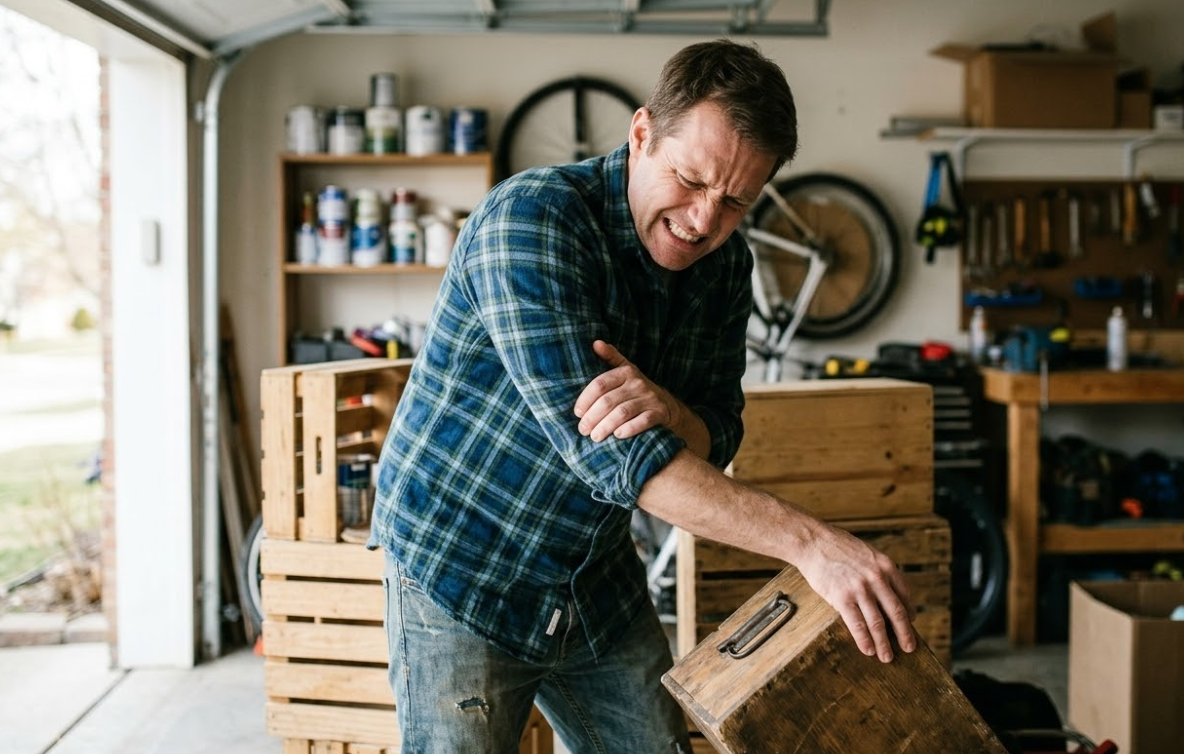
- The outside of the elbow hurts when lifting a cup, bag, or pan or when shaking hands.
- Pain is reproduced by extending the wrist or twisting an object.
- Racket sports, tool use, or prolonged keyboard and mouse work aggravates symptoms.
This pattern can fit lateral elbow tendinopathy, but it is not a self-diagnosis. Cervical radiculopathy, radial nerve entrapment, elbow joint disorders, and trauma may present differently and must be considered.
2. What Bodyall checks first
The doctor asks about onset and work or sport exposure, then checks lateral epicondyle tenderness, resisted wrist and middle-finger extension, pain-free grip strength, and elbow range of motion. No single provocation test is treated as definitive.
With tingling, sensory change, or finger and wrist weakness, the neck, shoulder movement, neurological findings, and radial nerve pathway are assessed. Imaging or electrodiagnostic referral is arranged when findings warrant it.
The most painful lifting, gripping, or twisting task and grip response are recorded before care, then repeated under the same conditions to determine whether the next step should change.
3. Treatment is selected by findings
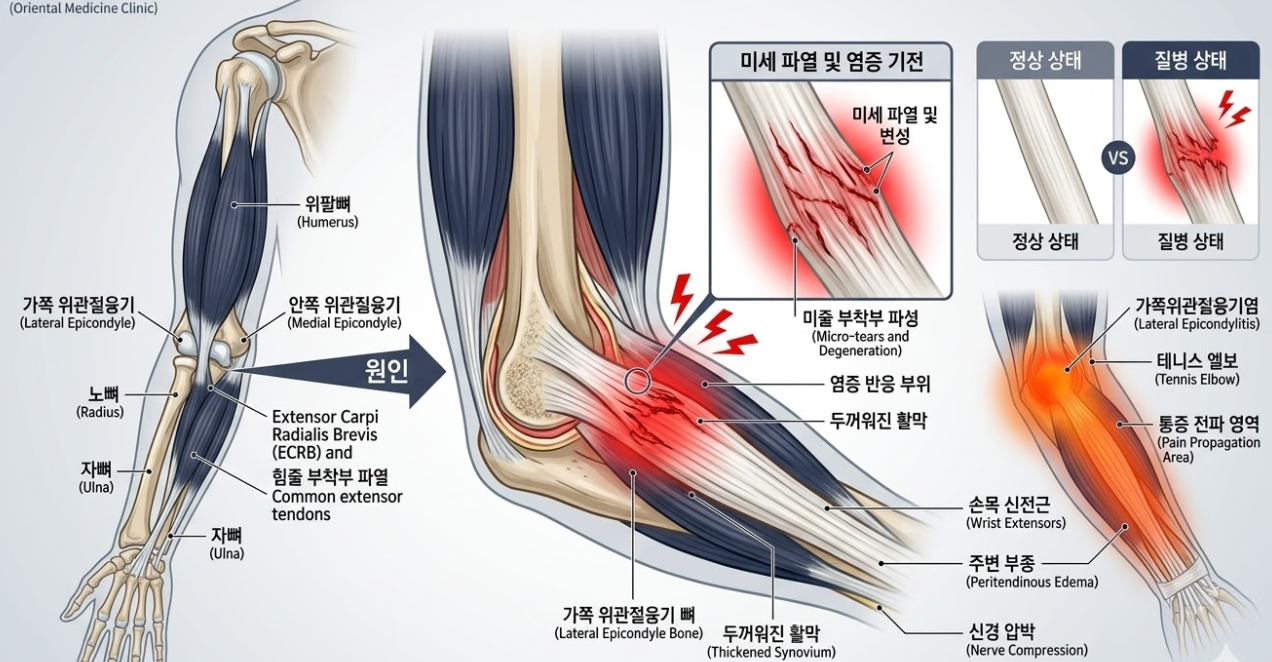
Provoking grip and wrist-extension load is modified without defaulting to complete rest. Wrist-extensor strengthening and functional loading are progressed within tolerance. Recovery varies with symptom duration and occupational demand.[1]
Acupuncture or pharmacopuncture may be selected to support symptom control. Myofascial Chuna addresses pain and movement limitation around the forearm and shoulder, while the response of the same lifting or gripping task helps guide progressive loading. Acupuncture reviews show a possible benefit alongside study-quality and bias concerns, so individual change is reassessed.[3]
When focal tenderness and functional limitation remain after adequate conservative care, the chief doctor may discuss acupotomy after explaining anatomy, alternatives, and risks. A single-blind randomized trial of 90 patients reported outcomes against steroid injection from 6 through 48 weeks.[2] Bodyall uses those findings as a reference while deciding from the focal examination and response to prior conservative care.
When neck, thoracic, or shoulder movement changes the elbow symptom or a separate movement restriction is found, corrective Chuna or SART may be added for that region. The same lifting or gripping task and elbow pain are retested afterward to adjust the next scope of care.
4. Seek other evaluation promptly when
There is deformity or major loss of movement after trauma; a red, hot, swollen joint with fever; rapidly progressive wrist or finger weakness or persistent sensory loss; or severe rest or night pain with systemic symptoms.
Acupotomy is invasive and can cause bleeding, bruising, infection, and injury to nerves, vessels, tendons, or nearby tissue. Tell the clinic beforehand about anticoagulants, bleeding disorders, infection, and allergies.
5. What to prepare when booking in Suwon
Examples include “lifting a one-litre bottle with my right hand,” “turning a screwdriver,” or “after 30 minutes at a keyboard.” Also share duration, tingling or weakness, and previous injections, rehabilitation, and medicines so the first assessment can set a meaningful differential and retest.
6. Frequently Asked Questions
People whose outer-elbow pain recurs with lifting, gripping, wrist extension, or twisting and who want tendon, nerve, neck, and shoulder causes distinguished in Suwon may be a good fit.
No. When findings are local to the elbow tendon, local load management and care come first. Corrective Chuna or SART is considered only when neck, upper-back, or shoulder movement findings materially relate to the elbow symptoms.
The chief doctor reviews symptom-producing work and sport, lateral epicondyle tenderness, resisted wrist extension, grip strength, elbow motion, and possible neck, shoulder, or radial nerve involvement. The same lifting or gripping task is rechecked after the selected care.
Medical review: Reviewed and approved by Chief Director Donghae Lee (APPROVED) ·