Coccyx Pain When Sitting on Hard Chairs: Correcting Structural Causes with Biomechanical Spatial Spinal Decompression Chuna Therapy (SART Protocol)
💡 30-Second Key Summary
• Coccyx pain is often caused by ligamentous tension resulting from pelvic imbalance, in addition to sequelae from trauma.
• Rather than simple rest, a conservative approach that corrects the structural alignment of a deviated coccyx and misaligned pelvis is necessary.
• Biomechanical Spatial Spinal Decompression Chuna Therapy (SART Protocol) is organically combined with needle-scalpel therapy to relieve adhesions around the coccyx and promote fundamental structural improvement.
1. Diagnosing Your Coccyx Pain Condition
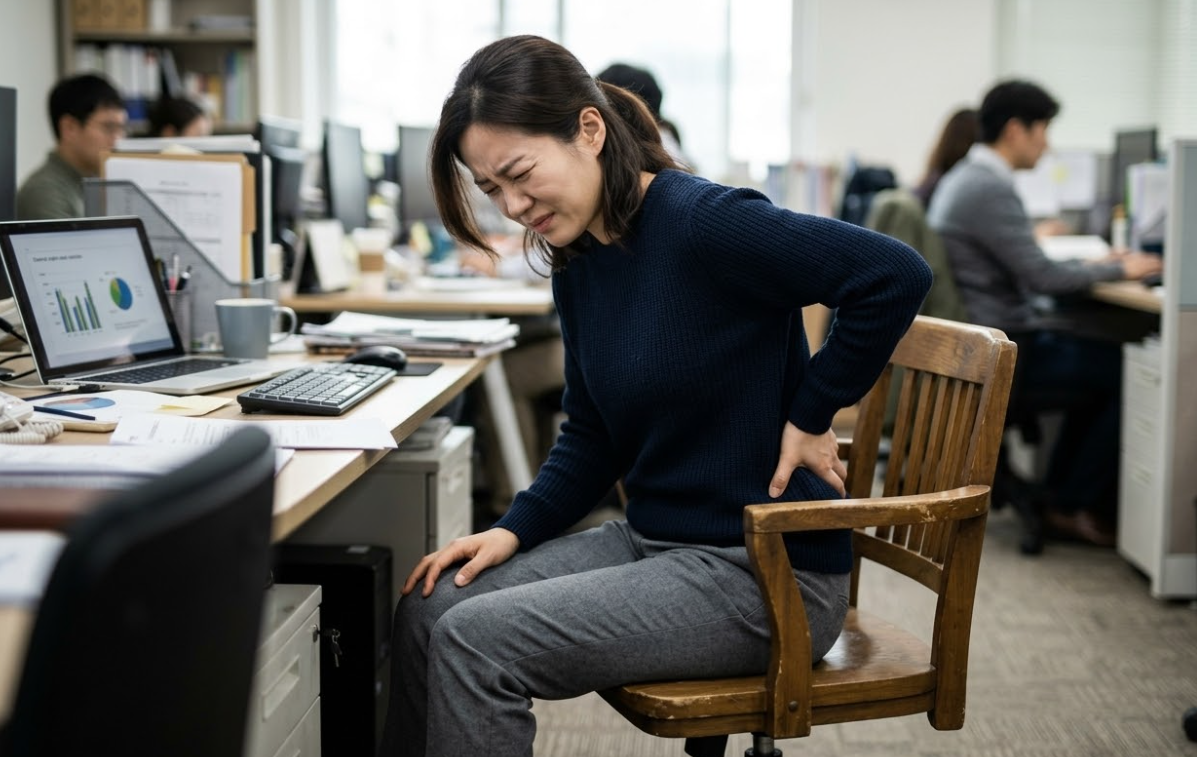
- Sharp or stabbing pain occurs when the tip of the coccyx makes contact with a hard surface while sitting.
- A deep stiffness in the buttocks and difficulty straightening the lower back are experienced upon standing after prolonged sitting.
- Sitting at an angle to one side, rather than in a neutral posture, temporarily relieves pain by distributing the load.
- A distinct, localized point of tenderness is felt upon palpation of the tissue surrounding the coccyx.
2. Biomechanical Mechanism Analysis: Why Does It Keep Hurting?
The coccyx is suspended from the tip of the sacrum, the central axis of the pelvis, and is intricately connected to numerous ligamentous and muscular tissues. When the spinal and pelvic structures become misaligned, these ligaments are pulled taut to one side, inducing chronic biomechanical tension; this causes the coccyx itself to curve inward or displace, resulting in continuous pressure and irritation with every sitting motion.
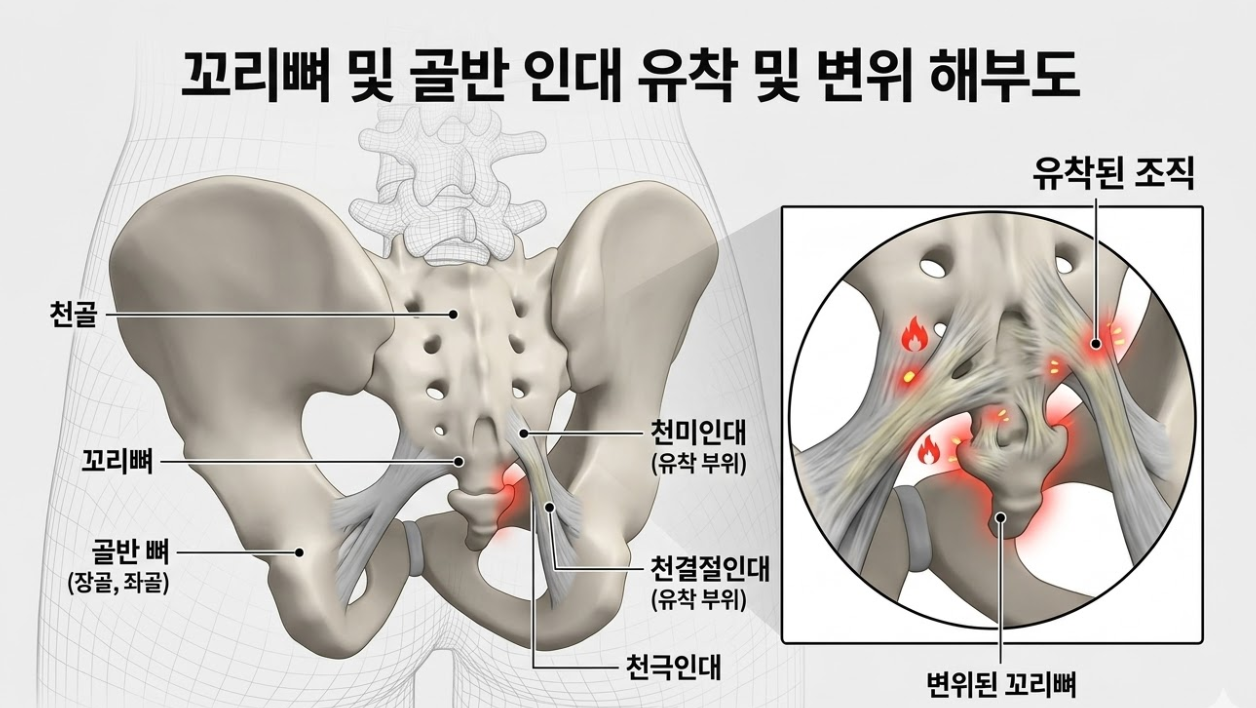
Research addressing the combined application of manual therapy and acupuncture for traumatic coccygodynia presents the academic validity of an integrated treatment strategy that simultaneously approaches structural alignment of the tissue surrounding the coccyx and the relief of irritation[2].
3. Integrated Conservative Treatment Solutions (Total Care)
By delicately handling the sensitive tissue surrounding the coccyx, we present a biomechanical conservative treatment alternative that can be safely selected at the pre-surgical stage.
• Biomechanical Spatial Spinal Decompression Chuna Therapy (SART Protocol): Based on the principles of traditional Osteopathy and Chuna manual therapy, this is a biomechanical conservative correction technique that secures the physical space between spinal segments. Through this, the alignment of the misaligned pelvis and sacrum is corrected, addressing the malalignment of the coccyx and resolving the abnormal tension applied to it. This aligns with the principles of an integrated treatment strategy that approaches pelvic and sacral alignment correction and irritation relief from multiple angles[2].
• Needle-Scalpel Therapy (Adhesiolysis): This micro-releases the ligamentous tissue surrounding the coccyx that has hardened and adhered due to chronic irritation, enhancing structural mobility and stabilizing pain sensitivity.
• Comprehensive Herbal Care Solution: General acupuncture treatment and high-concentration bee venom acupuncture are used to control inflammatory responses in deep tissue, while cupping and electro-moxibustion therapy are administered concurrently to relax tension in the pelvic floor muscle group. In chronic coccydynia, repeated conservative stimulus therapy may contribute to tissue recovery and the stabilization of pain sensitivity[1].
• Modern Herbal Physical Therapy: ICT and TENS devices are utilized to stabilize neuropathic pain around the pelvis and promote increased local blood circulation.
A case applying low-level laser acupuncture in refractory coccydynia following a traumatic coccyx fracture presents academic evidence that non-surgical conservative treatment can meaningfully contribute to pain relief and functional recovery prior to surgical intervention. In this study, the patient demonstrated a significant reduction in pain scores and restored capacity for daily activities following 24 weeks of conservative treatment, suggesting this is one of the safe and effective non-surgical conservative treatment options prior to surgery.
4. Biomechanical Lifestyle Guidelines for Preventing Recurrence
- Utilizing a Weight-Distribution Cushion: Using a donut-shaped cushion with a hollow center is beneficial for structural protection, preventing the coccyx from bearing direct load against the chair surface.
- Spinal Hygiene Stretching: Making it a habit to naturally open the chest and tilt the head backward evenly distributes the load across the entire spine, reducing the mechanical pressure exerted on the pelvis.
💡 Bodyall Clinical Note: The trend of stabilized pain sensitivity and enhanced structural mobility observed in coccydynia cases treated at Bodyall Korean Medicine Clinic through accumulated Chuna therapy clinical experience corresponds to the mechanical principles of the integrated pelvic and sacral realignment strategy validated in the cited research study[2].
💡 Q. Why is Biomechanical Spatial Spinal Decompression Chuna Therapy (SART Protocol) helpful for coccyx pain?
This is because the root cause of coccyx pain is often located in the structural imbalance of the pelvis. Biomechanical Spatial Spinal Decompression Chuna Therapy (SART Protocol) is an approach with an objective protocol that expands the intervertebral space and corrects pelvic malalignment to physically disperse the abnormal ligamentous tension applied to the coccyx.