Piriformis Syndrome Self-Diagnosis: Analyzing the Causes of Buttock Pain and Leg Numbness
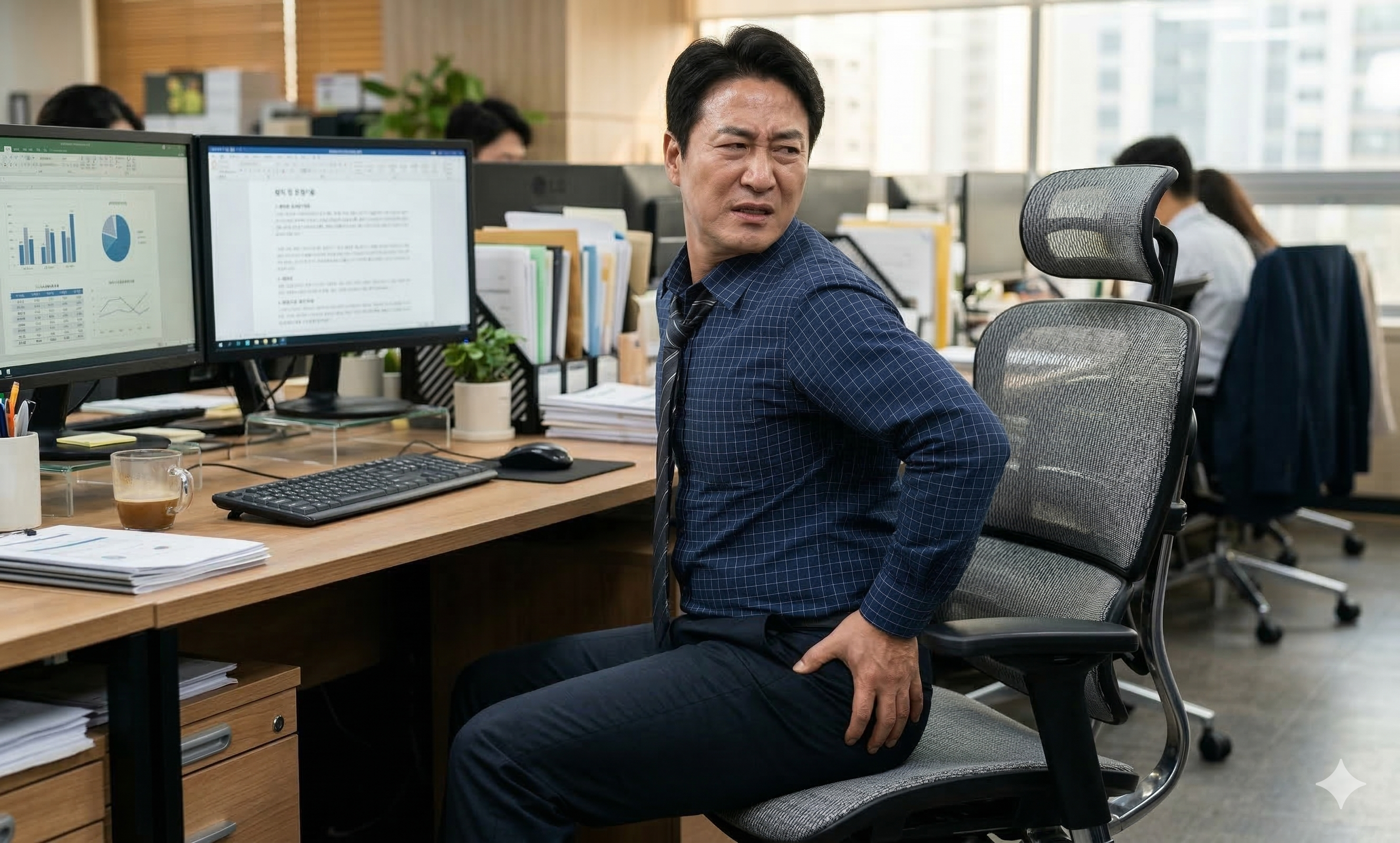
💡 Key Summary Analyzed by the Medical Editor
Piriformis syndrome is a biomechanical abnormality in which a deep pelvic muscle compresses the sciatic nerve, resulting in radiating pain down the lower extremity.
Although clinically similar to lumbar disc herniation, it is primarily characterized by severe tenderness deep within the buttock and numbness that worsens upon sitting, rather than pain originating from the lumbar spine itself.
Based on an analysis of clinical cases from patients visiting our main clinic in Ingye-dong, Suwon, as well as from surrounding areas such as Gwanggyo, Yeongtong, and Dongtan, correcting the alignment of the misaligned pelvis and spinal segments through conservative treatment is essential for a solution aimed at improving the fundamental structural causes of degenerative spinal diseases.
Clinical Differentiation via Piriformis Syndrome Self-Diagnosis
If you are experiencing discomfort in daily life due to persistent numbness along the lateral buttock and posterior lower extremity without distinct lumbar pain, this may indicate a state of nerve compression beyond simple muscle fatigue. If three or more of the following clinical signs apply, a precise biomechanical evaluation is recommended.
- A sharp, deep neuralgic sensation gradually rises from within the buttock during prolonged driving or sitting in an office chair for more than 30 minutes.
- Numbness worsens due to stimulation of the hip external rotators when sitting cross-legged on the floor or habitually crossing the legs while seated in a chair.
- Applying firm pressure to the central point of the affected buttock, where the sciatic nerve passes, elicits a startling radiating pain and severe tenderness.
- Pain intensifies during sleep when turning to a specific side or changing position, as the tension in the internal pelvic muscles temporarily increases.
- A strong pulling sensation manifests in the posterior thigh as the gluteus maximus and piriformis contract while climbing stairs or walking up a steep incline.
The Mechanism of Pain Onset from a Biomechanical Perspective
The piriformis muscle, located deep within the pelvis, is a key muscle that maintains hip joint stability. Directly beneath this muscle runs the sciatic nerve, the thickest nerve network in the human body. When the piriformis becomes abnormally hypertonic or hypertrophied due to spinal-pelvic imbalance or persistent poor posture, it results in continuous nerve compression that induces pain.
Clinical Differences Between Lumbar Disc Herniation and Piriformis Syndrome
Since both conditions share radiating pain down the lower extremity, they are easily confused; however, they exhibit clear differences depending on the fundamental anatomical location of nerve compression.
| Category | Lumbar Disc Herniation | Piriformis Syndrome |
|---|---|---|
| Primary Site of Pain Onset | Localized lumbar pain and radiating pain throughout the entire lower limb | Deep gluteal tenderness and numbness centered on the posterior thigh |
| Response to Lumbar Flexion | Numbness worsens due to disc compression when bending the upper body forward | Relatively less restriction in lumbar range of motion depending on postural changes |
| Clinical Triggering Characteristics | Pain triggered by coughing or sneezing, which increases intra-abdominal pressure | Symptoms are worst during prolonged sitting with direct weight-bearing on the buttock |
A Step-by-Step Conservative Solution Addressing the Structural Cause
Temporary relaxation of the gluteal muscles or superficial treatment alone often fails to restore pelvic alignment, leading to easy symptom recurrence. Bodyall precisely controls the root cause by correcting the underlying biomechanical torsion.
- Biomechanical Spatial Spinal Decompression Chuna Therapy (SART Protocol): This is a biomechanical conservative correction technique that secures physical space between spinal segments based on the principles of traditional Osteopathy and Chuna manual therapy. Through this, the precisely misaligned pelvis and sacrum are realigned, fundamentally improving the structural vicious cycle in which the nerve is physically compressed.
- Chuna Manual Therapy: This provides a biomechanical conservative treatment alternative that can be safely considered prior to surgery by relaxing shortened myofascial chains around the hip joint and restoring joint mobility.
- Acupotomy (Adhesiolysis): This technique directly resolves deep nerve compression by micro-dissecting the degenerated areas of the piriformis muscle, which have become anatomically adhered and fibrotic (hardened) due to chronic stimulation. A study systematically analyzing the effects of acupotomy treatment on piriformis syndrome suggests that invasive intervention on chronically adhered and fibrotic piriformis regions is clinically utilized to alleviate sciatic nerve compression[2]. The acupotomy performed at our clinic also adopts an approach based on this same biomechanical principle, directly resolving nerve compression by finely dissecting the hardened, degenerated areas of the piriformis muscle. Furthermore, a retrospective clinical study comparing the short-term efficacy of ultrasound-guided hydrodissection combined with acupotomy release versus hydrodissection alone for Deep Gluteal Syndrome demonstrates that combined approaches utilizing acupotomy are being clinically reviewed for nerve compression pain originating deep within the gluteal region[1]. The acupotomy treatment at our clinic aligns with this academic trend, addressing the fundamental structural issue of sciatic nerve compression by precisely dissecting adhesions in the tissue surrounding the piriformis.
- High-Concentration Bee Venom Pharmacopuncture: This rapidly suppresses the aseptic inflammatory response induced around the sciatic nerve and blocks pain-mediating substances to prevent further nerve damage.
The Biomechanical Spatial Spinal Decompression Chuna Therapy (SART Protocol) offered at Bodyall Korean Medicine Clinic can be considered, based on this clinical evidence, as one of the safe and effective non-surgical conservative treatment options for piriformis syndrome.
📍 Clinic Information
Hours: Weekday evening treatment until 20:30 | Weekends/Holidays until 16:00
Location: 3-minute walk from Exit 9, Suwon City Hall Station (connected to metropolitan transit networks including Gwanggyo, Yeongtong, and Dongtan)
View Directions & Detailed Hours ➜💡 Bodyall Clinical Note: The trend of nerve decompression and symptomatic relief observed in Bodyall Korean Medicine Clinic's accumulated acupotomy clinical experience aligns anatomically and scientifically with the tissue dissection mechanisms utilized to address deep gluteal syndrome as demonstrated in the cited research study[1].