Suwon Post-Medication Weight-Maintenance Consultation: Chief-Director-Led BodyallFit Care
Build the maintenance plan before records and care become fragmented
BodyallFit is a relevant option for patients who are preparing to stop, or have already stopped, a GLP-1 medicine or phentermine and want appetite, symptoms, weight, lifestyle, and concurrent products reviewed in one plan. The chief director reviews the medication timeline and current changes one-to-one, assesses whether herbal medicine is suitable, and sets practical follow-up and stopping criteria. During prescribed herbal care, patients can use the KakaoTalk contact provided in treatment to ask the same chief director directly about medicine use, food, and exercise.
Bring the prescriber's plan and recent records to Bodyall Korean Medicine Clinic near Suwon City Hall Station for a maintenance consultation. Dose changes, stopping, and restarting the original medicine remain with its prescriber.

No. Trial extensions and meta-analyses have found average weight regain after treatment ends, but individual changes vary with the medicine, initial weight loss, food intake, activity, health, and follow-up period. Make a maintenance plan with the prescriber rather than changing the dose or stopping on your own.
1. Distinguish GLP-1 medicines from phentermine
GLP-1 receptor agonists act on a pathway involved in satiety, gastric emptying, and glucose regulation. Phentermine is a different appetite suppressant that acts on the sympathetic nervous system. Their mechanisms, approved uses, duration, contraindications, adverse effects, and discontinuation plans differ. Evidence about stopping a GLP-1 medicine therefore should not be applied directly to phentermine or described as one shared “central nervous system blockade.”
Appetite and energy expenditure may adapt during weight loss. After treatment ends, recording changes in appetite, food intake, activity, and symptoms alongside weight gives the chief director concrete information for the maintenance consultation.
Do not reduce, stop, restart, or replace a prescription medicine with another medicine or herbal product on your own. Persistent severe abdominal pain, repeated vomiting or dehydration, fainting or altered consciousness, suspected low blood glucose while using diabetes medicines, and pregnancy or breastfeeding plans require the prescriber or appropriate medical assessment before a routine weight consultation.
2. Why prepare the maintenance plan before treatment ends
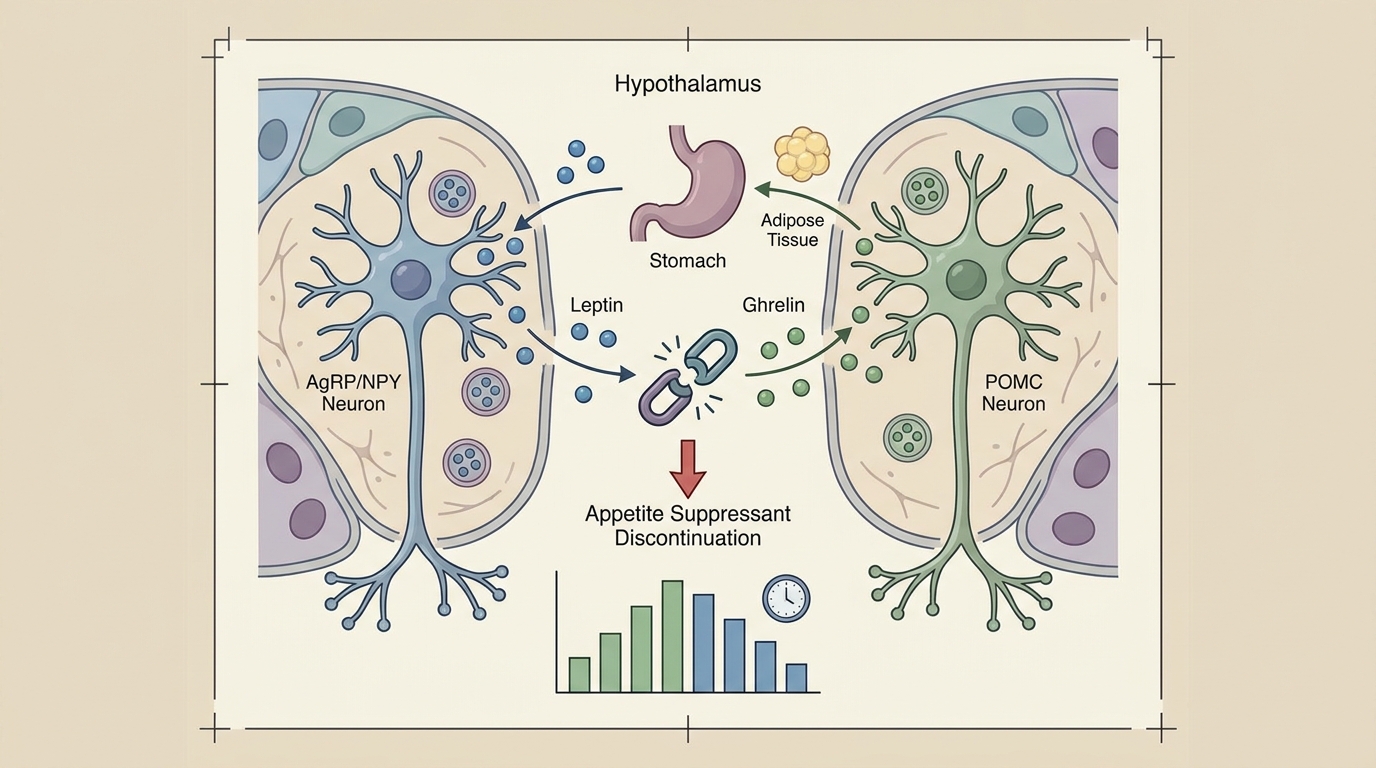
A US electronic health record cohort included 125,474 adults with overweight or obesity. Estimated discontinuation within one year was 46.5% among people with type 2 diabetes and 64.8% among those without it. Each 1% weight increase after discontinuation was associated with a 2.3% or 2.8% higher reinitiation hazard, respectively. Because this was observational, weight gain cannot be treated as the only cause of restarting treatment[1].
A 2025 systematic review and meta-analysis pooled eight randomized trials with 2,372 participants. Mean regain after discontinuation was 2.20 kg for liraglutide and 9.69 kg for semaglutide or tirzepatide, with a tendency to track the original amount lost. Because these are averages across different medicines and follow-up periods, the consultation also reviews the individual medicine, amount lost, and course after discontinuation[2].
In the STEP 1 extension, participants who had received semaglutide 2.4 mg plus lifestyle intervention for 68 weeks regained about two-thirds of their prior weight loss during the following year after treatment stopped. The semaglutide group’s mean weight change increased by 11.6 percentage points from week 68 to week 120. The extension included only a subset of the original trial and did not continue a separate structured lifestyle intervention after withdrawal[3].
Terms in plain language
Weight regain means weight rises again after loss and varies greatly between people. A cohort study observes patterns and associations in real-world records but usually cannot establish cause and effect. A meta-analysis pools averages across studies; it does not predict an individual outcome.
3. What to review when planning maintenance
| Area | Questions to review | How it guides the next step |
|---|---|---|
| Medication history | Product, dose, start and stop dates, reason for stopping, prescriber’s plan | Avoid unsupervised changes and divide follow-up roles clearly |
| Changes and symptoms | Weight, waist, appetite, nausea, vomiting, constipation, abdominal pain, dizziness, possible low glucose | Separate expected changes from signals needing medical assessment |
| Lifestyle records | Food, alcohol, sleep, activity, and changes before and after medication use | Select feasible behaviors and self-monitoring measures |
| Concurrent products and risk | Diabetes, blood-pressure, and mental-health medicines; supplements and herbal products; pregnancy or breastfeeding plans | Review interactions, contraindications, adverse effects, and herbal suitability |
| Follow-up plan | Goals, visit interval, cost, communication scope, response and safety stopping criteria | Continue, adjust, stop, or refer according to findings |
NICE recommends explaining the possibility of regain and providing advice about self-monitoring and continued support after weight-management medicines or behavioral interventions end. The practical point is to build the maintenance plan before treatment finishes[4].
4. How BodyallFit connects the treatment options
In a BodyallFit weight-management consultation, the chief director reviews the medication timeline, appetite and gastrointestinal symptoms, weight and waist records, food, sleep, activity, concurrent medicines, and health together. Patients can bring records that were managed separately into one consultation and agree on lifestyle actions, herbal suitability, and follow-up criteria.
| Option | Role | What to confirm before choosing |
|---|---|---|
| Prescriber follow-up | Approved indication, dose changes, stopping or restarting, and medication adverse effects | No unsupervised changes; identify symptoms needing medical evaluation first |
| Lifestyle and behavioral care | Food, sleep, activity, self-monitoring, and sustainable goals | Excessive restriction, eating-disorder risk, and feasibility |
| Diet herbal consultation | Consider whether herbal medicine may belong in the plan for an individual adult with obesity | Ingredients, dose, concurrent medicines, cardiovascular, liver and kidney health, and adverse-effect monitoring[5] |
| BodyallFit one-to-one consultation | Connect records, risks, barriers, and agreed monitoring or stopping criteria | Confirm visit frequency, cost, and communication scope, then match the plan to current records and goals |
After herbal treatment is prescribed, patients can use the KakaoTalk contact provided in care to ask the prescribing chief director directly. Questions about medicine use, food, and exercise stay in the same clinical context and are used to shape the next plan. Response hours and scope are explained during the visit.
5. Prepare for a BodyallFit consultation and check suitability
- List the name, dose, and dates of every injection, prescription, herbal product, and supplement used or stopped.
- Record weight under similar conditions and waist circumference, if available, along with appetite and gastrointestinal symptoms for two to four weeks.
- Note changes in food, alcohol, sleep, and activity before and after medication use.
- Ask about the prescriber’s plan, feasible goals, visit frequency, cost, communication scope, and response or safety stopping criteria.
- During follow-up, review behaviors, symptoms, adverse effects, and any needed tests as well as weight.
It may be relevant for a patient who wants the chief director to review appetite and lifestyle changes after medication, concurrent products, and health together, then decide whether herbal medicine is suitable and agree on an actionable maintenance plan. When warning signs or medication adverse effects are suspected, contact the prescriber or obtain appropriate medical assessment first.
No. GLP-1 receptor agonists and phentermine, a sympathomimetic medicine, differ in mechanism, approved use, risks, and discontinuation planning. Evidence about stopping one medicine should not be transferred directly to the other; discuss each medicine with its prescriber.
The chief director reviews medicines used or stopped, appetite and other symptoms, lifestyle records, concurrent products, and health conditions to decide whether herbal medicine is suitable. During prescribed herbal care, patients can ask the same chief director directly about medicine use, food, and exercise, and the plan is adjusted according to changes and adverse effects. Decisions to stop or restart the original medicine remain with its prescriber.
Bring the names, doses, and dates of medicines, injections, herbal products, and supplements used or stopped; recent weight and waist records; appetite and gastrointestinal symptoms; food, sleep, and activity records; and the prescriber’s plan. Also confirm visit frequency, cost, communication scope, and follow-up or stopping criteria.
Document updated:
Medical review: Reviewed and approved by Chief Director Donghae Lee (APPROVED) ·