Walking, Resting, Then Walking Again: What Should Be Assessed First?

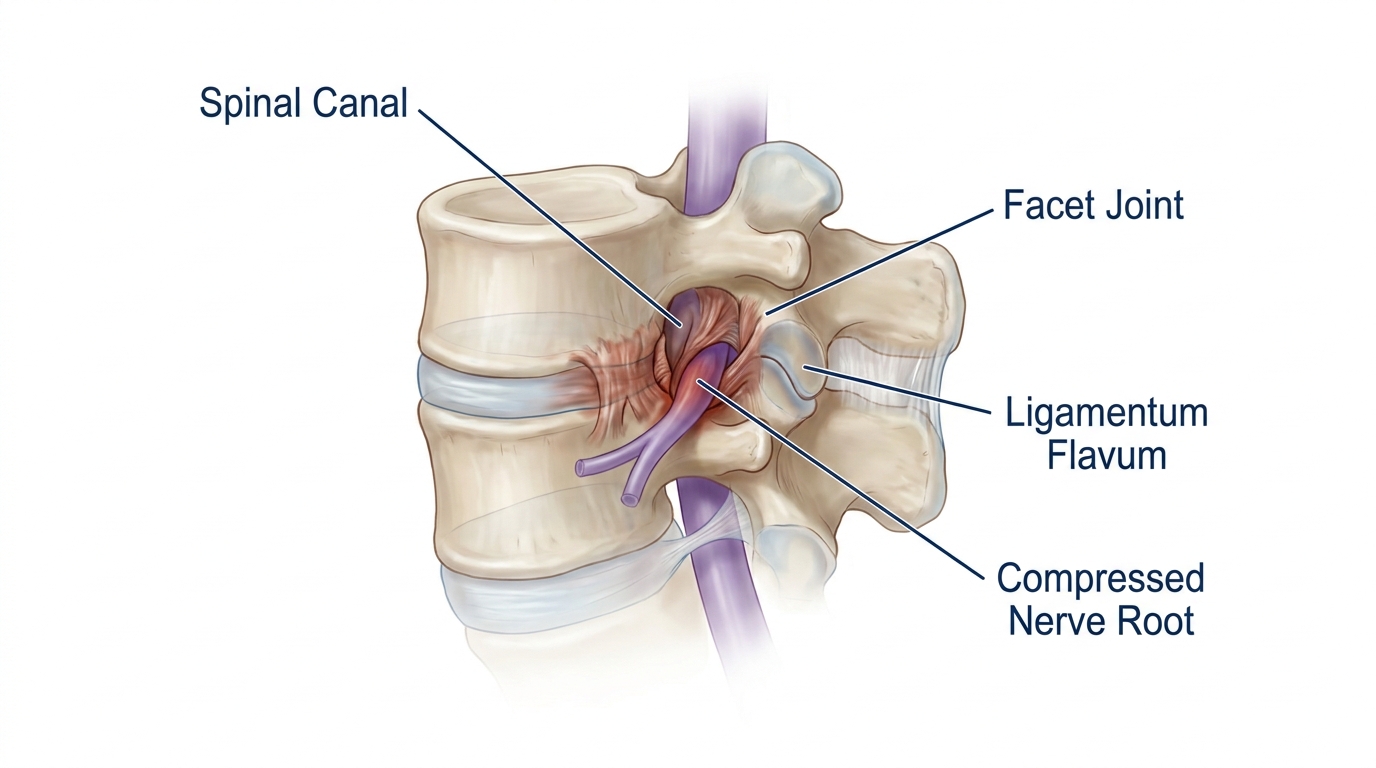
Leg heaviness, pain or numbness that builds with standing or walking and eases with sitting or bending forward warrants assessment for neurogenic claudication. At Bodyall, Chief Director Donghae Lee compares walking tolerance and posture response with strength, sensation, reflexes, lumbar and hip motion, and vascular clues. Care is not assigned from an MRI label alone: myofascial Chuna, conditional SART and Acupotomy have separate roles, followed by a retest of the same standing and walking task.
1. When leg symptoms fit neurogenic claudication
Pain, numbness, heaviness or weakness in the buttock, thigh or calf that increases with standing or walking and decreases with sitting or forward bending can fit neurogenic claudication from lumbar spinal stenosis. Peripheral arterial disease, hip or knee disease, peripheral neuropathy, disc disease and radiculopathy can look similar.
An MRI phrase does not decide care by itself.
Stenosis on imaging may not match the patient's limitation. Symptoms, neurologic findings, gait and the level shown on imaging must be interpreted together; no single physical maneuver confirms lumbar spinal stenosis[4].
2. Bodyall compares neurologic, joint and vascular factors in one assessment
Chief Director Donghae Lee asks how long the patient can stand or walk, whether bending changes symptoms, the numbness map, weakness, balance or falls, previous imaging and treatment response. The examination then compares gait, lumbar flexion and extension, leg strength, sensation, reflexes and neural tension with hip and knee motion and vascular clues such as pulses, color and temperature.
Bodyall had treated a cumulative 40,000 correction-care patients through December 2025 (clinic count). Drawing on this experience, the assessment decides what best explains the current limitation, whether conservative care is reasonable, and when imaging or specialist assessment takes priority, then follows the initial walking limitation through treatment selection and same-task reassessment.
3. Chuna, SART and Acupotomy have different roles
| Finding | Bodyall selection | Same-day retest |
|---|---|---|
| Lumbar or gluteal myofascial tension and restricted movement | Myofascial Chuna to adjust tone and movement tolerance | Standing, walking and sit-to-stand |
| A modifiable segmental or pelvic loading pattern | Segment-specific Chuna or conditional SART to assess movement response | Extension and leg symptoms during walking |
| A clear local soft-tissue target where invasive care is appropriate | Individual Acupotomy decision after discussing alternatives and risks | Tenderness, movement and walking tolerance |
SART is Bodyall's biomechanical spatial decompression Chuna protocol, addressing modifiable pelvic and spinal segment movement and loading identified on examination. Acupotomy is selectively considered for a defined local soft-tissue target; neither treatment changes fixed spinal-canal anatomy. Indication and intensity are guided by the response in the same standing and walking task.
4. Acupotomy evidence requires a cautious interpretation
A 2025 systematic review included 14 randomized trials and reported possible pain and function benefits in some comparisons with acupuncture. Results from combination-care trials were mostly inconsistent, safety was reported in only five studies, and the authors called for larger, higher-quality trials[1].
In a 2023 pilot trial of 34 participants, both groups received acupuncture and interferential current while the intervention group also received Acupotomy. Both groups improved over eight weeks, but the group-by-time interaction was not significant[2]. This does not establish structural decompression, a SART effect or Bodyall outcomes. A 2021 guideline supports initial multimodal conservative care including education, activity advice, exercise and manual therapy[3].
5. When urgent or specialist assessment comes first
New bladder or bowel dysfunction, saddle numbness or rapidly progressive leg weakness require urgent assessment for causes such as cauda equina syndrome. Fever with severe rest or night pain, major recent trauma, unexplained weight loss, a suddenly cold or pale foot, or abrupt loss of walking ability also changes priority. Persistent disabling claudication despite adequate conservative care or progressive neurologic symptoms warrants imaging and spine-specialist or surgical discussion[4].
Before Acupotomy, disclose:
anticoagulants or antiplatelet medicines, bleeding disorders, diabetes, immunosuppression and recent infection. Acupotomy carries risks including bruising, bleeding, infection and injury to nerves, vessels or surrounding tissue, so the target and indication are individualized.
What to bring
Bring recent MRI or CT images and reports, a medicine list, the time or distance you can walk without resting, and the posture that relieves symptoms. Bodyall uses the same standing or walking task for examination and post-care reassessment.
Book Bodyall in Suwon ➜6. Frequently Asked Questions
What symptoms commonly suggest lumbar spinal stenosis?
Neurogenic claudication commonly causes buttock or leg pain, numbness or heaviness with standing and walking, relieved by sitting or forward bending. Vascular, joint and peripheral nerve causes must be compared.
Does an MRI showing stenosis decide treatment?
No. The imaging level must fit the symptoms, neurologic examination and walking pattern.
Why choose Bodyall for lumbar stenosis assessment?
The chief director compares neurologic, joint and vascular factors, assigns separate roles to myofascial Chuna, conditional SART and Acupotomy, and retests the same standing and walking function.
Which symptoms need urgent assessment before conservative care?
New bladder or bowel dysfunction, saddle numbness and rapidly progressive leg weakness need urgent assessment. Severe systemic symptoms or sudden walking deterioration also require priority evaluation.
Medical review: Reviewed and approved by Chief Director Donghae Lee (APPROVED) ·