Pathological Mechanism of Cervical Spondylotic Radiculopathy and Non-Surgical Conservative Treatment Approaches

Cervical Spondylotic Radiculopathy is a condition that occurs when the neural foramen narrows due to degenerative changes in the cervical spine, resulting in physical compression of the nerve root. The primary clinical presentation involves radiating pain, sensory deficits, and muscle weakness that begin at the back of the neck and extend to the shoulder, arm, and fingertips. The incidence of this condition has been steadily rising as increased use of computers and smartphones has chronically established forward head posture.
Anatomical Mechanism of Foraminal Stenosis and Nerve Root Compression
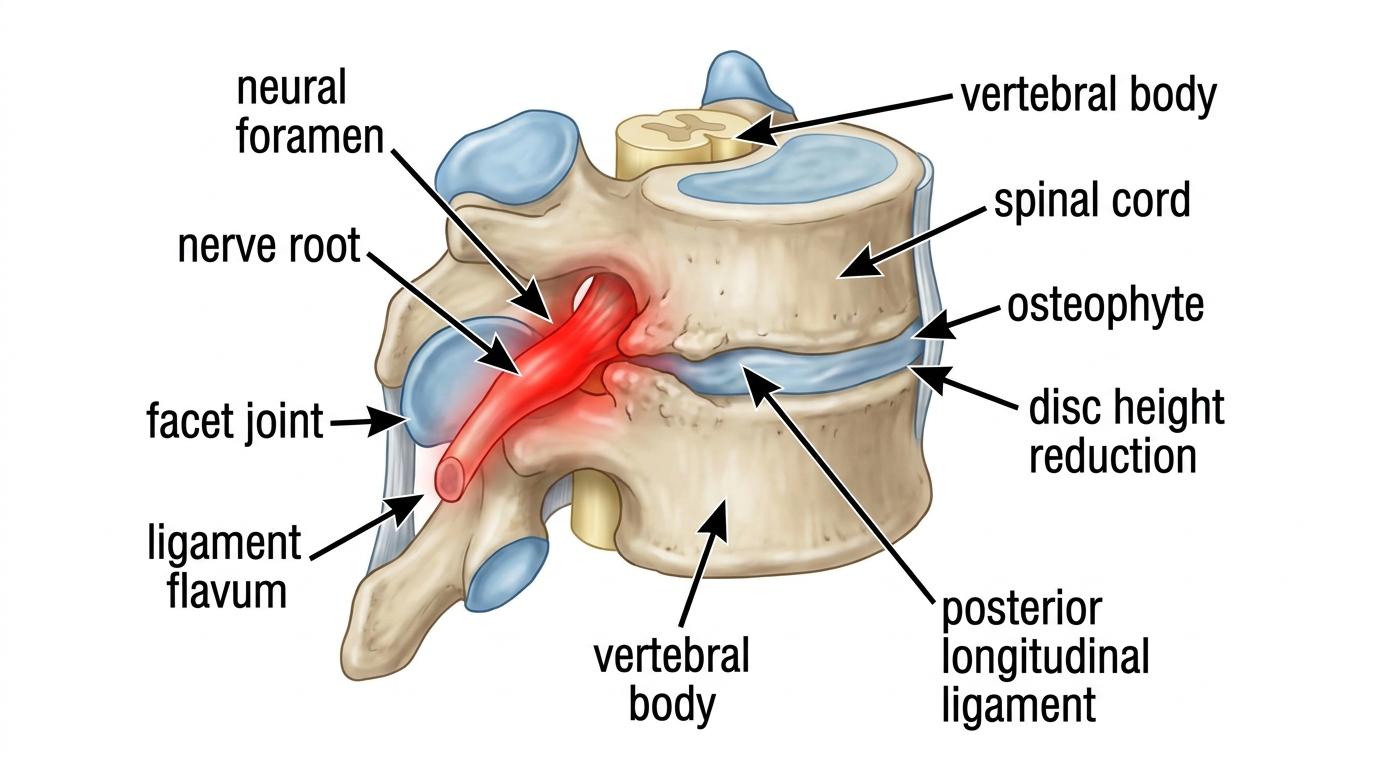
Between each cervical segment lies the neural foramen, a narrow passageway through which the nerve root travels; the size of this space is determined by the height of the intervertebral disc, the alignment of the facet joints, and the condition of surrounding ligaments and soft tissue. As cervical spondylosis progresses, a combination of factors—including disc height loss due to degeneration, osteophyte formation, and facet joint hypertrophy—act complexly to narrow the actual space of the neural foramen. When the nerve root is compressed by this stenosis, pain and paresthesia radiate along the dermatome innervated by that specific nerve, and in severe cases, muscle weakness and diminished reflexes may accompany these symptoms. Relevant pathological research suggests that cervical spondylotic radiculopathy is induced by neural foraminal stenosis, indicating that securing space within the anatomical corridor where the nerve root is compressed is a pathophysiologically core treatment objective[1].
Major Clinical Symptoms and Physical Examination Findings
The classic symptom of cervical spondylotic radiculopathy is a positive Spurling test, where radiating pain worsens when the neck is tilted backward or rotated toward a specific direction. Pain typically starts at the back of the neck and extends through the scapular region, upper arm, and forearm to the fingers, with the specific radiating location varying depending on the level of the compressed nerve root. Compression of the C6 nerve root is characteristically observed as numbness in the thumb and index finger area, while compression of the C7 nerve root presents primarily as sensory abnormality centered on the middle finger. Patients frequently complain of sleep disturbances due to nocturnal pain, and chronic cases may be accompanied by findings of decreased upper limb muscle strength, resulting in a weakened grip force.
While simple cervical disc herniation primarily compresses the nerve root due to acute swelling or rupture of the disc itself, Cervical Spondylotic Radiculopathy undergoes a pathophysiological process where chronic degenerative changes—such as osteophyte formation, facet joint hypertrophy, and ligament thickening—act in combination to gradually narrow the entire neural foramen. Consequently, it often shows a slower progression rate and a more chronic clinical course.
Academic Evidence and Approach Principles of Non-Surgical Conservative Treatment
Treatment for cervical radiculopathy should principally follow a graded approach depending on the severity of symptoms and the presence of neurological deficits. In the acute phase, pain relief and inflammation control take priority; once symptoms have stabilized, conservative treatment aimed at securing the space of the neural foramen and restoring the normal biomechanical alignment of the cervical spine plays a crucial role. Literature addressing the clinical efficacy of conservative treatment for cervical radiculopathy suggests that symptom management through physical approaches, rather than invasive surgery, can be an academically significant option[2].
Treatment Approach of Biomechanical Spatial Spinal Decompression Chuna Therapy (SART Protocol)
The Biomechanical Spatial Spinal Decompression Chuna Therapy (SART Protocol) administered at Bodyall Korean Medicine Clinic aims to normalize the cervical lordotic curvature and non-surgically alleviate soft tissue adhesions surrounding the neural foramen, thereby securing the physical space of the neural pathway. This is an approach that regulates the tension of muscles and ligaments surrounding the cervical spine and restores the normal range of joint motion to promote the alleviation of neurological symptoms. This principle is academically aligned with the conservative treatment rationale that seeks to secure spatial margin in nerve root compression lesions prior to surgical intervention. The Biomechanical Spatial Spinal Decompression Chuna Therapy (SART Protocol) is clinically utilized as one of the non-surgical conservative treatment alternatives that can be safely considered prior to surgery for cervical spondylotic radiculopathy.
| Category | Acute Phase Approach | Conservative Recovery Phase Approach |
|---|---|---|
| Treatment Goal | Pain and inflammation relief | Securing foraminal space and normalizing alignment |
| Primary Intervention | Stabilization, anti-inflammatory measures | Biomechanical Spatial Spinal Decompression Chuna Therapy (SART Protocol) |
| Expected Effect | Reduction of acute pain | Alleviation of nerve compression and prevention of recurrence |
Principles of Posture Correction for Daily Management and Recurrence Prevention
Maintaining a bent head position for extended periods, known as forward head posture, acts as a biomechanical burden factor that continuously narrows the space of the neural foramen. It may be helpful to position monitor and smartphone screens at eye level and to perform neck extension stretches, tilting the head backward every 40 minutes during long sitting periods, to repeatedly secure foraminal space. Since an excessively high pillow during sleep can distort the cervical lordotic curve, it is recommended to use a low pillow that naturally supports the cervical curve.
💡 Bodyall Clinical Note: The trend of achieving normalized cervical alignment and securing physical space within the neural foramen observed in Bodyall Korean Medicine Clinic's accumulated Chuna therapy clinical experience corresponds to the mechanical principles of foraminal decompression identified as a core anatomical objective in nerve root compression management[1], and aligns with the academic rationale supporting non-surgical conservative approaches as a significant alternative prior to invasive intervention[2].
Key Summary
- Cervical Spondylotic Radiculopathy causes radiating pain and numbness due to nerve root compression from foraminal stenosis.
- The location of radiating pain differs depending on the compression level of the C6 or C7 nerve root.
- Non-surgical conservative treatment is presented as an academically significant option prior to the surgical stage.
- The Biomechanical Spatial Spinal Decompression Chuna Therapy (SART Protocol) is a non-surgical approach targeting the securement of foraminal space.