Jaw clicking and pain on opening: should neck correction come first?
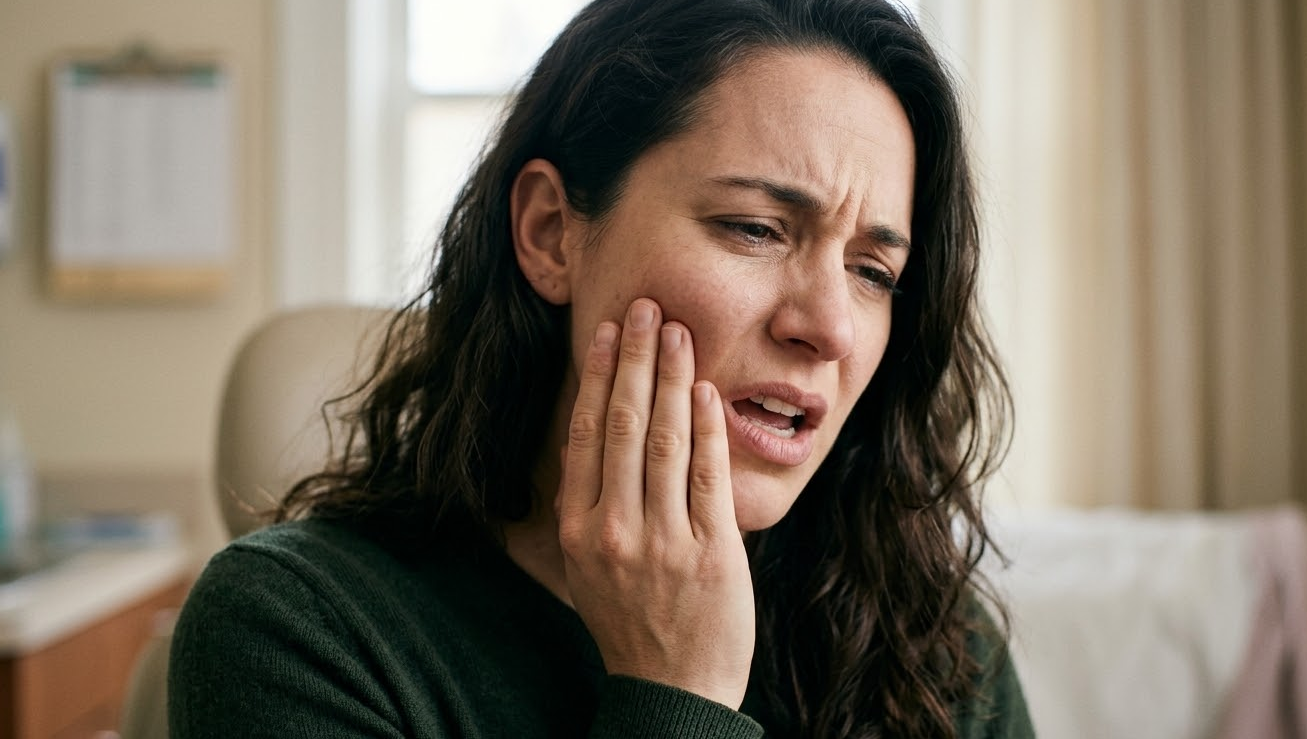
The temporomandibular joint and masticatory muscles should be assessed first. Even when the neck feels stiff, Bodyall does not assume upper-cervical alignment is the cause or apply SART immediately. Chief Director Donghae Lee compares opening range and path, joint sounds, masticatory tenderness, clenching or grinding and neck movement. Dental, ear, salivary and neurological causes are screened first. Only when jaw symptoms change with neck movement are the roles of myofascial Chuna and corrective Chuna/SART considered, followed by retesting the same opening and chewing task.
What does a TMJ assessment distinguish?
Painless clicking alone differs from clicking accompanied by pain, locking, restricted opening or a new bite change. Examination checks how far and in which path the mouth opens, when the sound occurs, temporalis and masseter tenderness, morning symptoms and clenching habits. Tooth pain, ear pain or hearing change, salivary swelling and altered sensation can feel like TMD and also need differentiation.
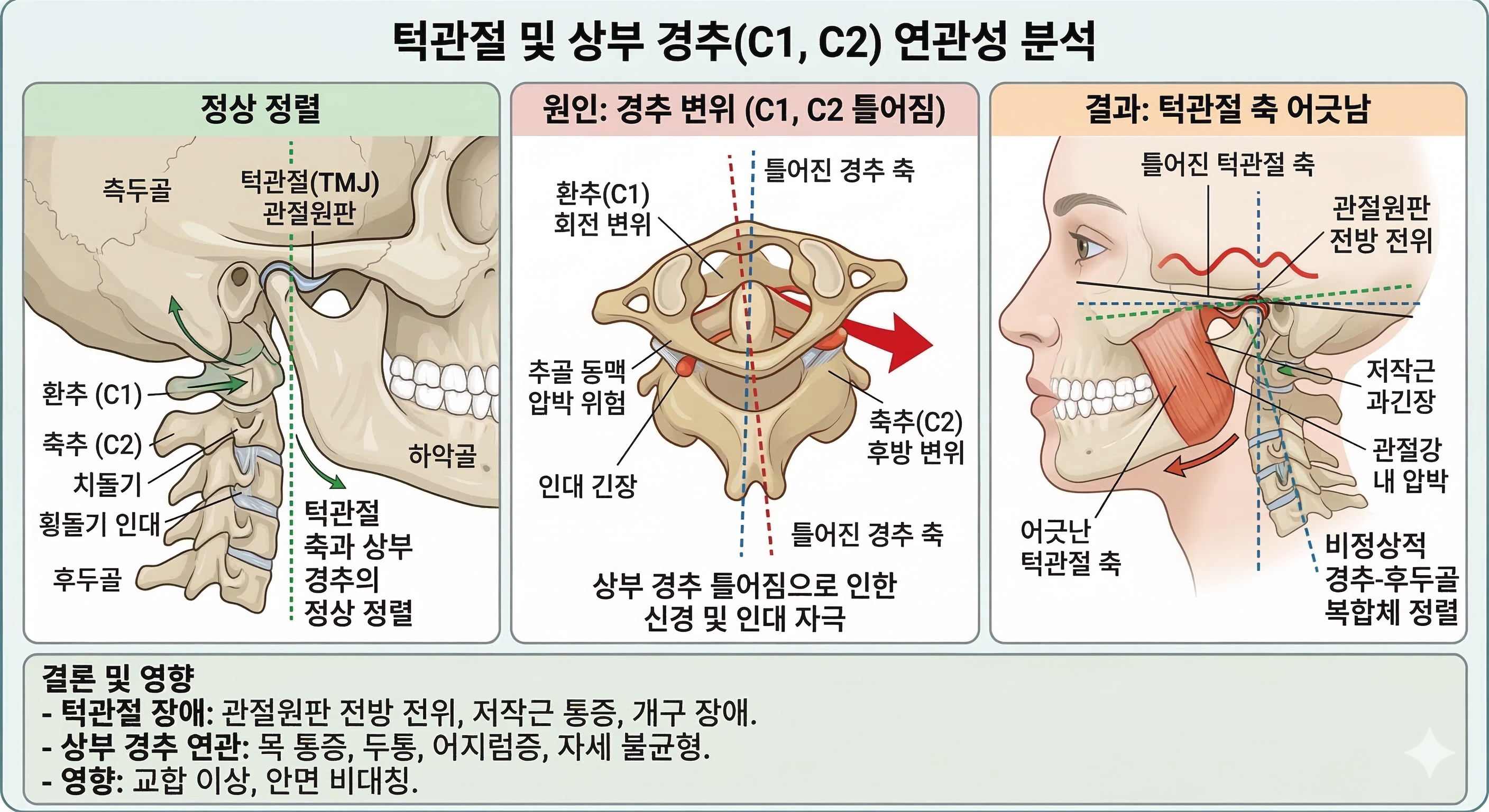
Jaw and neck symptoms may coexist, but TMD cannot be reduced to a claim that the jaw pivots on C1–C2 or that forward-head posture pushes the articular disc forward. Neck movement is included in care selection only when rotation, flexion or posture changes the jaw symptom and cervical or shoulder restriction is found.
How does Bodyall assess the jaw and neck together?
Bodyall Korean Medicine Clinic has cared for 40,000 cumulative correction-care patients through December 2025 (clinic count). The chief director hears the patient’s questions, separates jaw-joint and masticatory findings from dental, ear and neurological concerns, then checks whether the neck is actually involved during the same visit. Acupuncture or pharmacopuncture, myofascial Chuna, corrective Chuna/SART and conditional acupotomy are selected for distinct findings. The same opening, chewing and neck-turning tasks are retested; persistent locking or a limited response can lead to dental imaging, an oral appliance discussion or oral-maxillofacial review.
How are treatment roles separated?
| Finding | Possible approach | Same-day check |
|---|---|---|
| Masticatory tenderness, tension and pain with jaw use | Acupuncture, symptom-directed pharmacopuncture and myofascial work for the jaw and neck | Retest opening, chewing pain and tension |
| Jaw symptoms vary with neck movement and cervical or shoulder restriction is present | Myofascial Chuna or corrective Chuna/conditional SART | Adjust region, direction and intensity, then retest opening and neck rotation |
| Persistent focal soft-tissue restriction with a confirmed indication for acupotomy | Conditional acupotomy after explaining risks and alternatives | Check function and risks of bleeding, infection and neurovascular injury |
| Acute locking, new bite change, suspected trauma or infection, or progressive neurological signs | Dental, oral-maxillofacial or medical assessment before Chuna | Connect to imaging and specialist review |
Each option is selected for pain, muscle tension or movement findings identified on examination. Chuna and SART are scoped only when jaw symptoms vary with neck movement; acupotomy is considered only after confirming a separate indication and invasive risks. The next step follows the response of the same mouth-opening, chewing and neck-rotation tasks.
What does the evidence actually support?
A 2023 update of the Korean medicine clinical practice guideline presents acupuncture, pharmacopuncture and Chuna among options for TMD, with evidence and clinical judgment informing selection.[1] A 2010 randomized trial compared broad osteopathic manual therapy with conventional conservative care in 50 adults.[2] A 2018 pilot compared two osteopathic approaches, but it was small and did not examine SART directly.[3] Bodyall uses this evidence to separate the roles of jaw-joint and masticatory care from cervical manual care, with the individual examination determining what is used.
Signs that need medical assessment first
Inability to close or open the mouth after trauma, rapidly increasing facial or jaw swelling with fever, a new bite change or asymmetry, progressive numbness, weakness or facial palsy require prompt assessment. Sudden severe headache or visual change, jaw pain spreading with exertional chest discomfort, a cancer history or unexplained weight loss also take priority over jaw correction.
Preparing for your first visit
Note which side clicks, when it happens, the chewing task that hurts most, morning-to-evening changes and any clenching or grinding. Bring recent dental treatment details, oral appliances, imaging and a medication list.
Bodyall’s Suwon care sequence The chief director assesses the jaw joint, masticatory muscles and neck movement without deciding causation in advance. Only indicated care is selected, and the same opening, chewing and neck-turning tasks guide the next visit or dental/specialist referral.
For example: “My right jaw clicks and hurts when chewing firm food, and my jaw and neck are both stiff in the morning.” Include pain, locking and the most difficult task when choosing a time through Bodyall Korean Medicine Clinic booking in Suwon.
Key points
- Jaw clicking alone does not establish upper-cervical dysfunction or an indication for SART.
- Jaw-joint and masticatory findings are separated from dental, ear and neurological causes.
- Chuna and conditional SART are considered only when neck movement is relevant.
- The same opening and chewing task is retested, with dental or specialist assessment connected when needed.
Medical review: Reviewed and approved by Chief Director Donghae Lee (APPROVED) ·