Waking Up Shaking Numb Hands? Biomechanical Conservative Care for Carpal Tunnel Syndrome in Suwon Ingye-dong, Gwanggyo, Yeongtong, and Dongtan
💡 Bodyall 30-Second Summary
• A narrowing of the internal passage within the carpal tunnel can compress the median nerve, leading to symptoms of hand numbness.
• If left unaddressed, this may progress to sensory decline or atrophy of the small hand muscles, making it advisable to establish a safe, biomechanical conservative treatment alternative prior to surgical consideration.
• Bodyall combines Acupotomy Tunnel Expansion, which micro-dissects the hardened transverse carpal ligament, with the Biomechanical Spatial Spinal Decompression Chuna Therapy (SART Protocol)—a biomechanical conservative correction technique rooted in traditional Osteopathy and Chuna manual therapy principles that secures physical space between vertebral segments—to pursue a fundamental improvement of the underlying structural causes.
Could Your Wrist Condition Be Carpal Tunnel Syndrome?
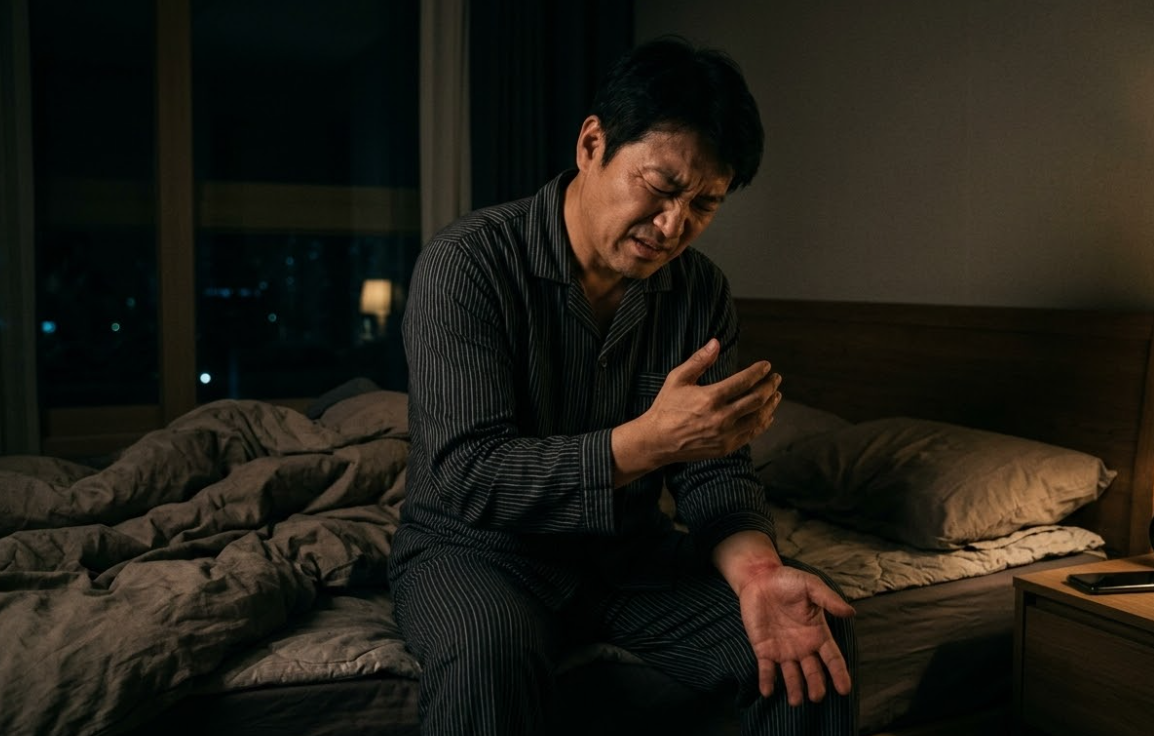
- Numbness and tingling in the hands at night disrupt sleep.
- Sensation is dull or numb from the thumb to half of the ring finger.
- Sudden loss of grip strength causes objects, such as a cup, to be dropped.
Mechanism Analysis: Why Does the Numbness Extend to the Fingers?
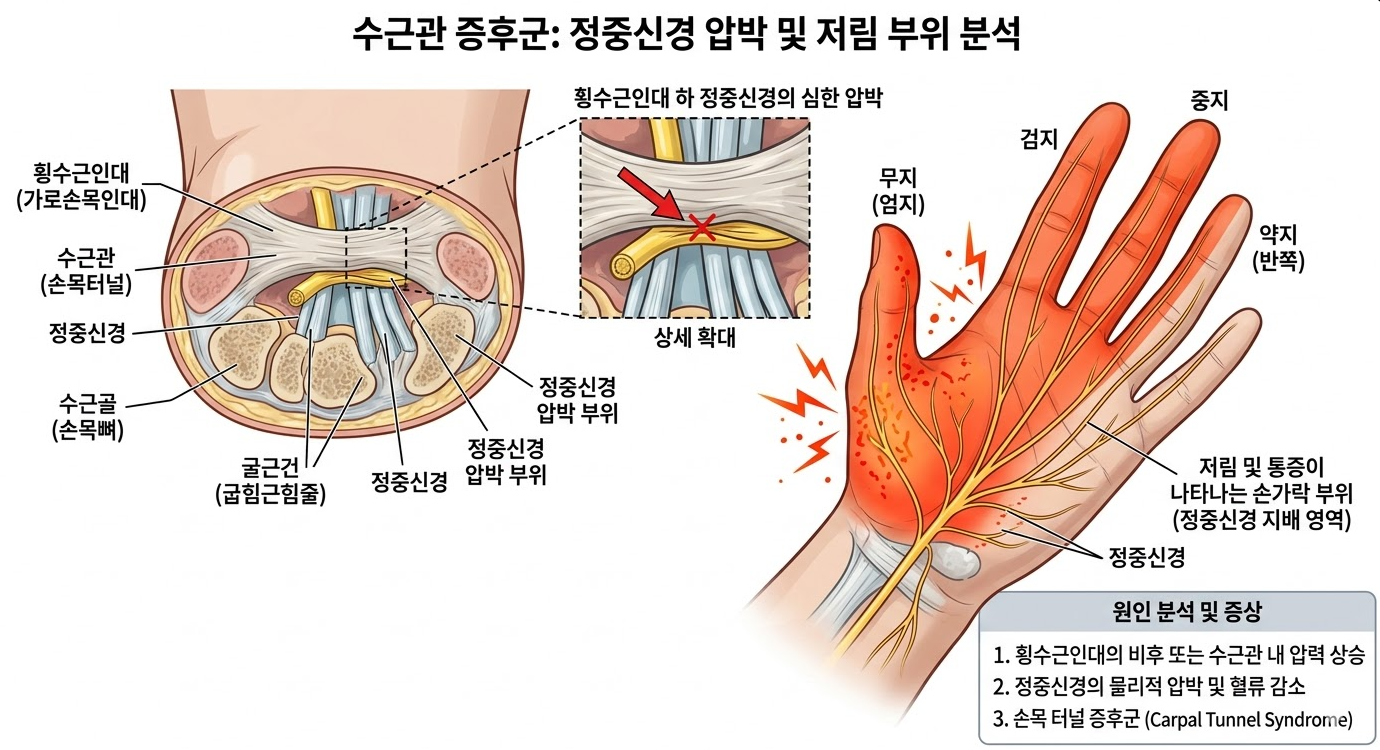
The carpal tunnel, the passage through which the median nerve travels inside the wrist, narrows and irritates the nerve. In particular, when cervical spine alignment is compromised, such as with forward head posture, imbalances in the upper extremity kinetic chain can sensitize the nerve roots further, exacerbating symptoms. For this reason, patients visit not only our main clinic in Suwon Ingye-dong but also travel from surrounding areas such as Gwanggyo, Yeongtong, and Dongtan for precise biomechanical diagnosis and root-cause improvement.
Bodyall Integrated Treatment Solutions
• Acupotomy Treatment: This technique micro-dissects the hardened transverse carpal ligament that induces compression, lowering pressure within the tunnel and facilitating smoother median nerve conduction. A multicenter retrospective study reported an approach combining ultrasound-guided acupotomy release with corticosteroid injection to address the narrowed carpal tunnel space characteristic of carpal tunnel syndrome. This aligns academically with the mechanism of acupotomy treatment, which involves micro-dissection of the thickened transverse carpal ligament to physically reduce internal pressure within the tunnel, suggesting that direct intervention at the site of median nerve compression has been clinically examined[1].
• Biomechanical Spatial Spinal Decompression Chuna Therapy (SART Protocol) and Chuna Manual Therapy: By integrating the Biomechanical Spatial Spinal Decompression Chuna Therapy (SART Protocol)—a biomechanical conservative correction technique based on traditional Osteopathy and Chuna manual therapy principles that secures physical space between vertebral segments—this approach corrects cervical alignment and restores structural balance throughout the upper body, aiming to improve the fundamental structural causes of degenerative spinal conditions. When hand numbness arises from nerve compression, physically expanding the intervertebral space via the Biomechanical Spatial Spinal Decompression Chuna Therapy (SART Protocol) to alleviate nerve root compression within the intervertebral foramen is being considered as a biomechanical conservative treatment alternative that can be safely explored prior to surgical intervention.
• Acupuncture and High-Concentration Bee Venom Therapy: These modalities aim to alleviate localized inflammatory responses around the affected nerve and promote cellular tissue regeneration. A randomized controlled trial involving patients with mild to moderate carpal tunnel syndrome reported symptomatic improvement in both the acupuncture and placebo acupuncture groups when combined with nighttime wrist bracing, though no statistically significant difference was found between the two groups. This study serves as a reference indicating that acupuncture, aimed at alleviating localized inflammatory responses around affected nerves and promoting tissue regeneration, may require further validation when considered as a standalone intervention[2]. Accordingly, Bodyall utilizes acupuncture not as an isolated therapy but as part of an integrated approach combined with acupotomy and the Biomechanical Spatial Spinal Decompression Chuna Therapy (SART Protocol) to pursue fundamental structural improvement together.
• Modern Physical Therapy: Utilizing ICT and TENS devices to relax surrounding soft tissue and modulate pain transmission pathways.
Median nerve compression resulting from carpal tunnel narrowing is often not merely a localized wrist issue but is frequently linked to structural imbalances in cervical alignment and the upper extremity kinetic chain. The Biomechanical Spatial Spinal Decompression Chuna Therapy (SART Protocol) secures physical space between vertebral segments to restore overall upper body structural balance, functioning as one pillar of an integrated approach that, alongside local passage expansion via acupotomy treatment, seeks to address the underlying causes.
📍 Clinic Information
Ingye-dong Korean Medicine Clinic near Exit 9, Suwon City Hall Station (Convenient access from Gwanggyo, Yeongtong, and Dongtan) | Evening consultations available until 20:30 on weekdays
View Detailed Directions ➜💡 Bodyall Clinical Note: The trend of reduced internal tunnel pressure and improved median nerve conduction observed in Bodyall Korean Medicine Clinic's accumulated acupotomy clinical experience aligns anatomically and scientifically with the ligament micro-dissection mechanism demonstrated in the cited research study[1].