Suwon Weight-Plateau Consultation: BodyallFit Care Led by the Prescribing Chief Director
Turn plateau records into a clinical plan
BodyallFit is a relevant option for patients whose weight has stopped changing and who are unsure how to adjust food or exercise, or whose prescription and lifestyle plans keep becoming disconnected. In a one-to-one visit, the prescribing chief director reviews the weight trend, everything being taken, lifestyle records, and the situations that made the plan difficult, then turns them into the next actions. During prescribed care, patients can use the KakaoTalk contact provided in treatment to ask the same chief director directly about medicine use, food, and exercise.
Bring recent records to Bodyall Korean Medicine Clinic near Suwon City Hall Station to discuss plateau management and whether herbal medicine is suitable.

Not necessarily. Energy expenditure can adapt during weight loss, but food intake, activity, sleep, medicines, health conditions, fluid shifts, and measurement conditions should also be reviewed. BodyallFit uses the timing of the plateau, records, and health information to plan the next step rather than relying on a single ‘broken metabolism’ explanation.
1. Review when the plateau began and what changed
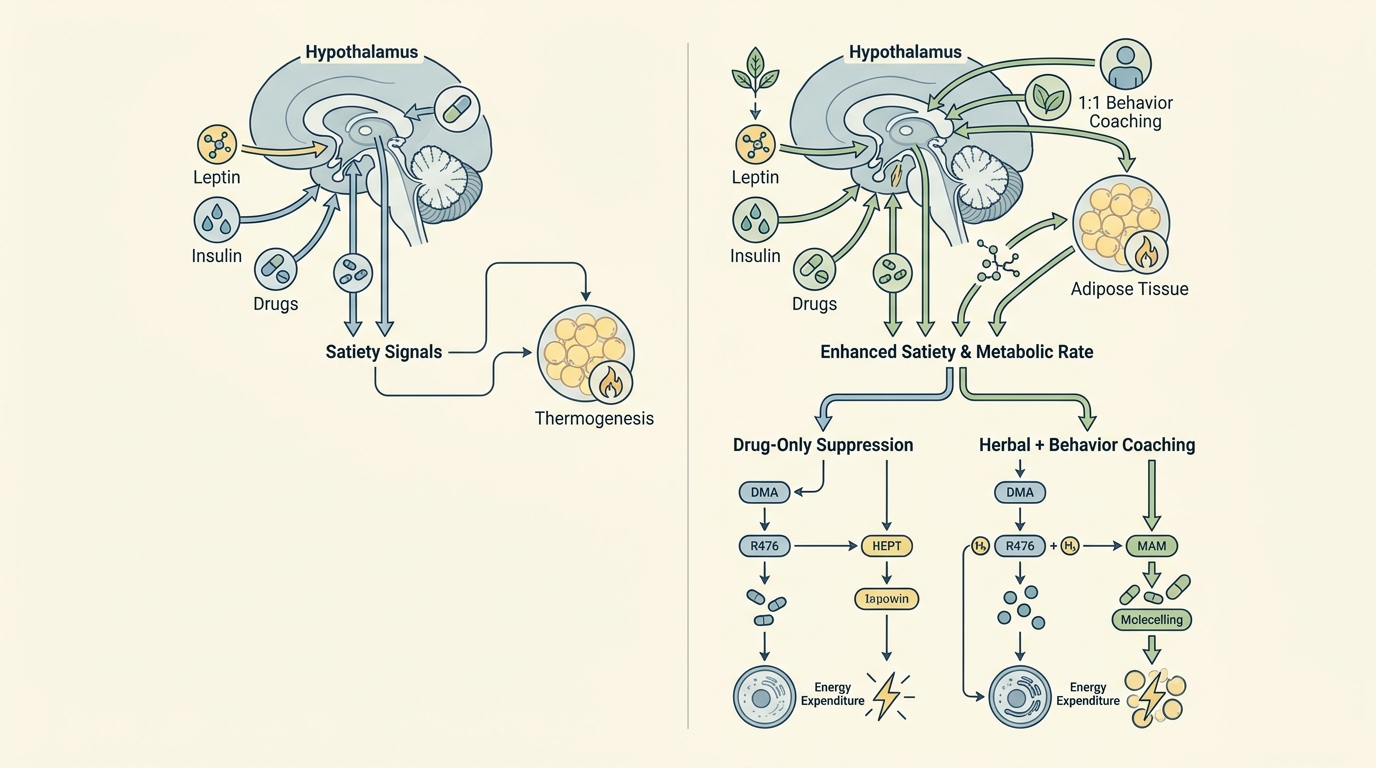
Adaptive thermogenesis means that energy expenditure after weight loss may fall more than expected. It does not mean that every plateau is caused by this response or that basal metabolic rate is permanently damaged. Incomplete food records, lower activity, sleep and stress, menstrual-cycle or fluid changes, medicines, thyroid disease, diabetes, and measurement conditions may also matter.
Appetite or weight can rise after stopping a medicine or herbal product, but treatments do not all work through the same mechanism, and immediate regain is not inevitable for everyone. NICE recommends discussing regain risk, self-monitoring, and continued support after weight-management medicines or behavioral interventions end[2].
Prompt medical assessment may be more important than a routine weight consultation when there is unexplained rapid weight change, severe thirst or frequent urination, chest pain, breathing difficulty, persistent vomiting or abdominal pain, fainting, suspected eating-disorder behavior, or questions about medicine or herbal-product use during pregnancy or breastfeeding. Bring a complete list of prescriptions, over-the-counter products, supplements, and herbal medicines.
2. Use research and personal records in the consultation
The SMARTER trial enrolled 502 adults. Both groups received a 90-minute one-to-one counseling session, a Fitbit, and a scale. At six months, weight changes were -3.16% and -3.20%; the between-group difference was -0.04 percentage points and was not significant. The study evaluated adding automated feedback to the same initial counseling. BodyallFit uses self-monitoring records differently: the prescribing chief director connects them with medicines, health, and practical barriers to decide the next action[1].
Terms in plain language
A plateau is a period with little apparent change in weight. Basal metabolic rate is the energy used at rest for basic life functions; it is not the same as total daily energy expenditure. Self-monitoring means recording and reviewing measures such as weight, food intake, or activity.
3. What a BodyallFit weight-management consultation reviews
BodyallFit does more than collect lifestyle data. The prescribing chief director links each record with the patient’s goals, safety factors, and barriers to action, then uses that information to set the next step and follow-up criteria.
| Area | Questions reviewed | How it informs a decision |
|---|---|---|
| Changes and goals | Recent weight and waist trends, plateau duration, priorities | Distinguish measurement variation from a trend and set realistic goals |
| Lifestyle records | Food, alcohol, sleep, activity, weekends, nights, barriers | Start with one or two changes that can be sustained |
| Health and products | Health conditions, pregnancy or breastfeeding plans, medicines, supplements, herbal products, previous adverse effects | Review suitability, duplication, interactions, and whether medical evaluation takes priority |
| Monitoring and stopping | Weight, waist, symptoms, blood pressure, follow-up interval | Continue, adjust, stop, or refer according to response and adverse effects |
Once prescribed care has started, patients receive a KakaoTalk contact through which they can ask the prescribing clinic director directly and continue medicine-use, food and exercise guidance within the same plan. Keeping plateau records, adverse effects and practical barriers connected to the prescribing consultation is an operational strength of BodyallFit. Confirm response hours, communication scope, duration and cost before booking because these depend on the individual plan and clinic operation.
4. Choose among lifestyle care, weight-management medicines, and herbal care by role
| Option | What to review | Limits and safety questions |
|---|---|---|
| Lifestyle and behavioral care | Food, sleep, activity, self-monitoring, and feasible goals | Sustainability, excessive restriction, and eating-disorder risk |
| Weight-management medicines | Approved indication, expected benefit, administration, and monitoring | Contraindications, adverse effects, interactions, and a maintenance plan discussed with the prescriber |
| Diet herbal medicine | Whether it may be considered for the individual adult with obesity | Ingredients and dose, cardiovascular, liver and kidney health, concurrent medicines, and adverse-effect monitoring[3] |
The 2024 Korean Medicine Clinical Practice Guideline for Obesity presents herbal medicine as an option for adults with obesity alongside diet, exercise, and behavioral care. BodyallFit applies that framework by reviewing health conditions, concurrent medicines, and adverse effects, then agreeing on follow-up measures such as weight, waist circumference, body fat, and symptoms[3].
5. Prepare records and agree on follow-up criteria
- Record recent weight under similar measurement conditions for two to four weeks, and waist circumference if available.
- Summarize weekday and weekend food, alcohol, sleep, activity, and when the plateau began.
- Bring the names and doses of prescriptions, injections, over-the-counter medicines, supplements, and herbal products.
- Ask about feasible behaviors, costs, treatment duration, communication scope, and stopping criteria—not only the target weight.
- During follow-up, review waist, behaviors, symptoms, and adverse effects as well as the scale.
It may be relevant when a person wants medicines, health conditions, lifestyle records, and monitoring considered together, with a clinical discussion of whether herbal medicine belongs in the plan. When warning signs or adverse effects are present, or when stopping a current prescription is being considered, contact the prescriber or obtain the appropriate medical assessment first.
Weight, food, and activity records are reviewed together with medicines, health conditions, and the real situations that interrupted the plan. The prescribing chief director sets the next actions and uses questions received during prescribed care to adjust the plan. This approach suits patients who want their records connected to clinical decisions.
The chief director reviews current health, medicines, supplements, and previous adverse effects to decide whether herbal medicine is suitable. If prescribed, food and exercise plans, follow-up measures such as weight, waist and symptoms, and adjustment or stopping criteria are agreed together.
The consultation reviews goals and weight trends, food, sleep and activity records, medicines, supplements, herbal products, health conditions and warning symptoms. During prescribed care, patients can ask the prescribing clinic director directly through the KakaoTalk contact provided and continue medicine-use, food and exercise guidance while agreeing follow-up and stopping criteria. Confirm communication scope and cost before booking.
Document updated:
Medical review: Reviewed and approved by Chief Director Donghae Lee (APPROVED) ·